Comparison
between visual assessment of jaundice, transcutaneous bilirubin and total serum
bilirubin in healthy term neonates needing phototherapy
Comparação
entre avaliação visual de icterícia, bilirrubina transcutânea e bilirrubina
sérica total em recém-nascidos a termo saudáveis com necessidade de fototerapia
Comparación entre la evaluación visual de la ictericia, la
bilirrubina transcutánea y la bilirrubina sérica total en recién nacidos sanos
a término que requieren fototerapia
Daniela
Hespanha Marinho1,2
Bruna Mai
dos-Santos1,3
Maria
Luiza Souza Nieto1,4
Regina
Paula Guimarães Vieira Cavalcante da-Silva1,5
Fabiano
Steil da-Silva1,6
1 Complexo Hospital de
Clínicas - Universidade Federal do Paraná, Neonatologia - Curitiba-PR, Brazil.
2 ORCID: https://orcid/org/0000-0002-9699-7241
3 ORCID:
https://orcid/org/0009-0006-9921-2813
4 ORCID:
https://orcid/org/0000-0002-6210-9584
5 ORCID:
https://orcid/org/0000-0002-2467-1760
6 ORCID:
https://orcid/org/0000-0003-1306-2182
Corresponding
author:
Daniela
Hespanha Marinho
E-mail: dhmarinho@hotmail.com
ABSTRACT
Introduction:
Neonatal
jaundice is one of the most common clinical conditions in newborns. Objective:
To evaluate the correlation between visual assessment of jaundice,
transcutaneous bilirubin (TcB) measurement, and total serum bilirubin (TSB)
level in newborns requiring phototherapy. Methods: This observational,
cross-sectional, and prospective study included term newborns from a tertiary
hospital who developed jaundice requiring phototherapy. The correlation between
visual assessment, TcB, and TSB was analyzed using one-way analysis of variance
(ANOVA) followed by Duncan’s post-hoc test. The correlation and consistency
between TcB and TSB were assessed using Pearson's correlation test and
Bland-Altman analysis. A p-value <0.05 was considered statistically significant.
Results: 187 newborns were included. Visual assessment of jaundice
showed a low correlation (22.1%) with TSB levels. The difference between TcB
and TSB levels was significantly greater in infants classified as Kramer zones
4 and 5 compared to zones 1-3 (p<0.001). A strong correlation was found
between TcB and TSB measurements (r=0.87; p<0.001). TcB values
underestimated TSB values by an average of 1.21 mg/dL. Conclusions: TcB
showed a good correlation with TSB and should be used as a reliable screening
method for neonatal jaundice. However, TcB tended to underestimate TSB levels.
The visual assessment of jaundice correlated poorly with bilirubin values and
should not be used as a standalone method to estimate bilirubin levels in
neonates.
Keywords: Jaundice;
Hyperbilirubinemia; Phototherapy; Infant, Newborn.
Introdução: Icterícia neonatal é
uma das condições clínicas mais comuns em recém-nascidos. Objetivo: Avaliar a
correlação entre avaliação visual da icterícia, medida da bilirrubina
transcutânea (BTC) e nível de bilirrubina sérica total (BST) em recém-nascidos
com necessidade de fototerapia. Métodos: Estudo observacional, transversal e
prospectivo incluiu recém-nascidos a termo de hospital terciário que
desenvolveram icterícia com necessidade de fototerapia. A correlação entre
avaliação visual, BTC e BST foi analisada pelo one-way analysis of variance
(ANOVA) seguido do teste post-hoc de Duncan. A correlação e consistência entre
BTC e BST foram realizadas pelo teste de correlação de Pearson e análise de
Bland-Altman. Valor de p<0.05 foi considerado estatisticamente
significativo. Resultados: Foram incluídos 187 recém-nascidos. A avaliação
visual da icterícia demonstrou baixa correlação (22.1%) com os níveis de BST. A
diferença entre os níveis de BTC e BST foi significativamente maior nos bebês
classificados como zonas de Kramer 4 e 5 comparados as zonas 1-3 (p< 0.001).
Foi encontrada uma forte correlação entre as medidas da BTC e TSB (r=0.87;
p<0.001). Os valores da BTC subestimaram os valores da BST em média de 1.21
mg/dL. Conclusões: A BTC mostrou boa correlação com a BST e deve ser usada como
um método de triagem confiável para icterícia neonatal. A BTC tendeu, contudo,
a subestimar os níveis de BST. A avaliação visual da icterícia apresentou baixa
correlação com os valores de BST e não deveria ser usada como método isolado
para estimar os níveis de bilirrubina em recém-nascidos.
Palavras-chave: Icterícia;
Hiperbilirrubinemia; Fototerapia; Recém-Nascido.
Resumen
Introducción La
ictericia neonatal es una de las afecciones clínicas más comunes en los recién
nacidos. Objetivo: Evaluar la correlación entre la evaluación visual de la
ictericia, la medición de la bilirrubina transcutánea (BTC) y el nivel de
bilirrubina sérica total (BST) en recién nacidos que requieren fototerapia.
Métodos: Este estudio observacional, transversal y prospectivo incluyó a recién
nacidos a término de un hospital terciario que desarrollaron ictericia que
requirió fototerapia. La correlación entre la evaluación visual, BTC y BST se
analizó mediante análisis de varianza unidireccional (ANOVA) seguido de la
prueba post-hoc de Duncan. La correlación y consistencia entre BTC y BST se
evaluaron mediante la prueba de correlación de Pearson y el análisis de Bland-Altman.
Un valor de p <0,05 se consideró estadísticamente significativo. Resultados:
Se incluyeron 187 recién nacidos. La evaluación visual de la ictericia mostró
baja correlación (22,1%) con los niveles de BST. La diferencia entre los
niveles de BTC y BST fue significativamente mayor en los lactantes clasificados
como zonas 4 y 5 de Kramer en comparación con las zonas 1-3 (p<0,001). Se
encontró una fuerte correlación entre las mediciones de BTC y BST (r=0,87;
p<0,001). Los valores de BTC subestimaron los valores de BST en un promedio
de 1,21 mg/dL. Conclusiones: BTC mostró una buena correlación con BST y debería
utilizarse como un método de cribado fiable para la ictericia neonatal. Sin
embargo, BTC tendió a subestimar los niveles de BST. La evaluación visual de la
ictericia mostró una baja correlación con los valores de BST y no debería
utilizarse como método aislado para estimar los niveles de bilirrubina en
recién nacidos..
Palabras
Clave: Ictericia; Hiperbilirrubinemia; Fototerapia; Recién
nacido.
INTRODUCTION
Neonatal
jaundice is a common condition affecting 60% of full-term and 80% of preterm
infants; it is associated with elevated levels of unconjugated bilirubin in
circulation, condition known as indirect hyperbilirubinemia.1-5 Most
cases of neonatal jaundice are mild and resolve spontaneously. In some
instances, however, the newborn may require treatment, such as phototherapy or
exchange transfusion.5,6 In cases of severe, untreated jaundice,
infants can develop significant hyperbilirubinemia, which may lead to bilirubin
encephalopathy, permanent brain damage, and even death.6-14
Neonatal
jaundice results from the accumulation of the yellow-orange pigment bilirubin
in the sclera, skin, and other tissues, and follows a cephalocaudal
progression.2,3,8,15-17 For jaundice to be visually detectable, the
total serum bilirubin (TSB) concentration must exceed 5-6 mg/dL. However, even
experienced neonatologists underestimate bilirubin concentrations in these
newborns.2,4,15,18,19
The
American Academy of Pediatrics (AAP) recommends that bilirubin measurement be
performed on all newborns of 35 weeks’ gestation or older prior to hospital
discharge to determine the risk of developing significant hyperbilirubinemia.2,3,5,6,8,11,13,20-22
Measurement of total serum bilirubin remains
the gold standard for assessing jaundice.1,3,8,13,14,17,20,21,23
However, obtaining a blood sample to measure TSB is an invasive, painful, and
time-consuming procedure; it can cause infection in the infant and also
generates stress for the parents.1-4,6,11,13,14,23 Transcutaneous
bilirubin (TcB) measurement was introduced by Yamanouchi and colleagues in
1980.6,7,22 Today, TcB is widely accepted as a non-invasive,
portable, cost-effective, and easy-to-use alternative for assessing bilirubin,
providing an instant result that correlates well with TSB levels.1,5,6,9,10,14,21-23
The device
that measures TcB emits light onto the skin (typically the sternum or forehead)
and analyzes the intensity of the reflected light at specific wavelengths.1-3,5,7,10,14,15
Various consensus statements and studies recommend TcB measurement as a
screening tool to detect clinically significant jaundice and, consequently,
reduce the need for frequent blood sampling in newborns of more than 35 weeks’
gestation.1,5,10,20,21,22,24-26 In general, a safety margin of 3
mg/dL is used when TcB is measured.1,21 However, TcB measurements
may overestimate or underestimate bilirubin values when compared to TSB.1,7,10
The reliability of TcB measurements decreases significantly when bilirubin
concentration exceeds 12-15 mg/dL.2,15,21,24,26
Neonatal
jaundice is a common issue among newborns; approximately one in ten infants
develops clinically significant jaundice requiring monitoring or treatment.2
Thus, this study aimed to analyze the correlation between visual assessment of
jaundice, TcB and TSB levels in healthy term newborns admitted to rooming-in
care who required phototherapy. Furthermore, the accuracy of clinical
assessment among healthcare professionals with varying levels of experience –
including pediatric residents, pediatricians, and neonatologists – was
investigated.
METHOD
Study design and
population
This
prospective, observational, cross-sectional study was conducted in the
rooming-in care of a tertiary maternity
hospital in Southern Brazil. The research was approved by the Human Research
Ethics Committee of the Hospital de Clínicas Complex at the Federal University
of Paraná (CAAE 71306723.8.0000.0096/2023, on August 3, 2023).
The
study included term infants admitted to the rooming-in care who developed
neonatal jaundice and required phototherapy between August 3, 2023, and August
2, 2024. Exclusion criteria were newborns with infections or genetic syndromes,
those readmitted for phototherapy without having undergone phototherapy during
a previous hospital stay, and infants requiring transfer to the Neonatal
Intensive Care Unit.
The
estimated sample size was based on an expected prevalence of phototherapy
needed among term infants of approximately
6%, with a 95% confidence interval and a 3% margin of error, resulting in a
minimum sample of 184 patients.
Study variables
Maternal
information – including age during pregnancy, race, and mode of delivery – was
obtained from all participants. Neonatal data included sex, gestational age,
birth weight, cause of jaundice, visual assessment of jaundice, age in hours at
the onset of jaundice and at the start of phototherapy, as well as TcB and TSB
measurements. Data such as the duration of phototherapy and length of hospital
stay were also collected.
Laboratory
assessments included blood typing and Rhesus (Rh) factor for both mother and
infant, direct Coombs test, hematocrit, reticulocyte count, and levels of TSB
and indirect bilirubin.
Definitions
Visual
assessment of jaundice was performed by pediatric residents, pediatricians, or
neonatologists using Kramer zones during the newborn’s daily physical
examination in the rooming-in care and prior to hospital discharge.19
The Kramer score estimates jaundice intensity based on the progression of
yellow skin discoloration from the head toward the hands and feet. In zone 1,
jaundice is confined to the face and neck (TSB 4-8 mg/dL, mean 6 mg/dL); in
zone 2, jaundice progresses to the trunk down to the umbilical region (TSB 5-12
mg/dL, mean 9 mg/dL); in zone 3, jaundice extends to the groin and upper thighs
(TSB 8-16 mg/dL, mean 12 mg/dL); in zone 4, it involves the knees and elbows
down to the ankles and wrists (TSB 11-18 mg/dL, mean 15 mg/dL); and in zone 5,
it reaches the feet and hands, including the palms and soles (TSB ≥15 mg/dL,
mean 18 mg/dL).19 Clinical assessment of jaundice and TcB
measurement were performed within a 30-minute interval. Correct classification
of Kramer zones was established retrospectively based on TSB values, comparing
the measured TSB against the estimated values for each level corresponding to
the Kramer zones.
The
transcutaneous bilirubinometer used was the Dräger JM-105®. Three measurements
were taken on each newborn’s sternum; the device then calculated a mean value
and displayed it to the examiner. TcB
assessment was performed during routine jaundice screening or, at the very
least, prior to hospital discharge.19 Laboratory tests were ordered
when the newborn’s TcB level was 2-3 mg/dL below the threshold for initiating
phototherapy.21 Venous or arterial blood samples for TSB assessment were collected within 30-60
minutes of the TcB measurement. TSB levels were determined using a
spectrophotometric method with an automated biochemical analyzer (Alinity i,
Abbott). In a few instances, blood samples were not collected during the night
to avoid delaying the initiation of phototherapy.
The
indication for phototherapy was based on the nomogram proposed by the AAP in
2004 for newborns with a gestational age of 35 weeks or more, and in most
cases, it was guided by TSB levels.20 The 2004 consensus guidelines
were used because they remained the standard reference for attending physicians
regarding jaundice assessment and phototherapy indications.
Statistical analysis
Statistical
analyses were performed using Python software (version 3.11) with the SciPy,
Statsmodels, Seaborn, Matplotlib, and Pandas packages. Continuous variables
were presented as means with standard deviation or medians with interquartile
range (IQR), depending on the data distribution. Categorical variables were
expressed as absolute and relative frequencies. Categorical variables were
compared using Pearson’s chi-square test. To compare TcB and TSB with Kramer
zones, a one-way analysis of variance (ANOVA) was used, followed by Duncan’s
post-hoc test to assess differences between groups.
The
correlation between TcB and TSB levels was assessed using Pearson’s correlation
coefficient (r), and the linear relationship between the variables was
expressed via a simple linear regression equation, including the calculation of
the coefficient of determination (R²). Agreement between the two methods was
examined using Bland-Altman analysis, estimating mean bias and limits of agreement
(±1.96 standard deviations). Scatter plots with an identity line were
constructed to compare the distribution of measurements. To investigate the
reproducibility and consistency of clinical thresholds, the Intraclass
Correlation Coefficient (ICC) was calculated, and scatter plots were generated
to visualize the line of association between TcB and TSB.
A p-value
< 0.05 was considered statistically significant, and a significance level of
5% was adopted for all tests.
RESULTS
During the
study period, 3,570 babies were born at our institution. Of these, 3,117 were
term newborns, and 2,951 were assigned to rooming-in care with their mothers.
Among the babies assigned to rooming-in, 201 (6.8%) developed indirect
hyperbilirubinemia requiring phototherapy. Fourteen patients were excluded from
the study due to parental refusal (n=9), congenital infections (n=3), sepsis
(n=1), and the need for transfer to the Neonatal Unit (n=1). The final sample
consisted of 187 newborns.
The mean
maternal age was 27.7 ± 6.7 years, and 110 (58.8%) mothers were white. Most
babies were born via vaginal delivery (77.0%), and 92 (49.2%) were male. The
mean gestational age was 38.6 ± 1.3 weeks, and the mean birth weight was
3,134.4 ± 447.9 g. The most common causes of jaundice were ABO incompatibility
(40.1%) and breastfeeding jaundice (31.6%).
Jaundice
was initially detected at a median age of 25 hours (IQR = 18-36); most cases
were classified as Kramer Zone 2 (47.1%), with a mean TcB level of 8.9 ± 2.4
mg/dL and a mean TSB level of 10.6 ± 2.8 mg/dL. Phototherapy was initiated at a
median age of 44 hours (IQR = 28-54). At the same time, visual assessment
classified most cases as Kramer Zones 2 and 3 (71.1%); however, based on TSB
levels, the correct Kramer Zone classification fell between 3 and 5 in 81.3% of
cases. Mean TcB at the start of phototherapy was 11.0 ± 2.6 mg/dL, and mean TSB
was 12.4 ± 3.2 mg/dL. Overall, TcB values were lower than the corresponding TSB
values. The median duration of phototherapy was 30 hours (IQR = 24-50), and the
mean length of hospital stay was 119.7 ± 35.9 hours.
Visual
assessment of jaundice at the start of phototherapy showed poor agreement with
Kramer Zone classification based on TSB levels, with only 22.1% of cases
correctly classified. Accuracy analysis regarding visual jaundice assessment
versus TSB levels among evaluators showed rates of 21.7% for pediatric
residents, 21.2% for pediatricians, and 44.4% for neonatologists (Pearson’s
chi-square test). Correct Kramer Zone classification was determined
retrospectively based on TSB values and adjusted using Duncan’s post-hoc test.
The difference between TcB and TSB values was significantly greater in infants
classified as Kramer Zones 4 and 5 compared to those classified as Zones 1, 2,
and 3 (p < 0.001) (Table 1).
Table 1. Correlation between Kramer zone, TcB, and
TSB
|
TcB/TSB
|
Kramer zone at the onset of jaundice
|
p
|
|
1
(n = 50)
|
2
(n = 85)
|
3
(n = 31)
|
4
(n = 5)
|
5
(n = 0)
|
|
TcB
|
6.8+1.4
|
9.0+1.7
|
11.2+2.3
|
13.1+2.3
|
--
|
< 0.001
|
|
TSB
|
7.8+1.6
|
10.5+2.3
|
12.5+2.0
|
15.4+2.3
|
--
|
< 0.001
|
|
Difference between TSB and TcB
|
-0.6
|
-1.1
|
-1.1
|
-2.3
|
--
|
< 0.001
|
|
|
Kramer zone at the start of phototherapy
|
|
|
TcB/TSB
|
1
(n = 23)
|
2
(n = 62)
|
3
(n = 60)
|
4
(n = 19)
|
5
(n = 0)
|
p
|
|
TcB
|
7.4+1.5
|
10.3+1.8
|
12.2+2.1
|
13.4+1.8
|
--
|
< 0.001
|
|
TSB
|
8.0+1.6
|
11.5+2.3
|
13.5+2.2
|
16.4+2.2
|
--
|
< 0.001
|
|
Difference between TSB e BTC
|
-0.5
|
-1.2
|
-1.4
|
-2.6
|
--
|
< 0.001
|
|
|
Correct Kramer zone at the start of
phototherapy
|
|
|
TcB/TSBS
|
1
(n = 3)
|
2
(n = 19)
|
3
(n = 54)
|
4
(n = 54)
|
5
(n = 33)
|
p
|
|
TcB
|
5,3+1,0
|
7,1+1,0
|
9,9+1,3
|
12,2+1,6
|
13,5+1,7
|
< 0,001
|
|
TSB
|
5,5+0,4
|
7,4+0,8
|
10,6+0,8
|
13,5+0,9
|
16,7+1,6
|
< 0,001
|
|
Difference between TSB and TcB
|
-0,2
|
-0,3
|
-0,8
|
-1,3
|
-3,0
|
< 0,001
|
|
TcB:
Transcutaneous bilirubin. TSB: Total serum bilirubin. One-way ANOVA, Duncan's
post-hoc test.
|
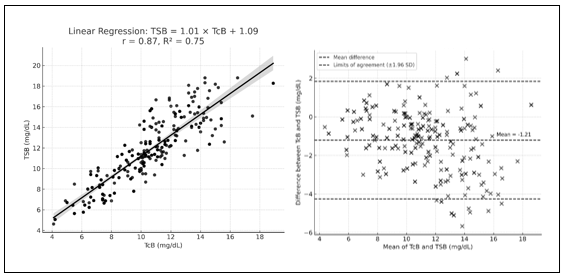
Both the
Pearson correlation coefficient and linear regression analysis revealed strong
correlation between TcB and TSB levels (r = 0.87, p < 0.001; R² = 0.75). In
the Bland-Altman analysis, TcB values were, on average, 1.21 mg/dL lower than
TSB values, with limits of agreement ranging from -4.26 to +1.84 mg/dL (Figure
1).
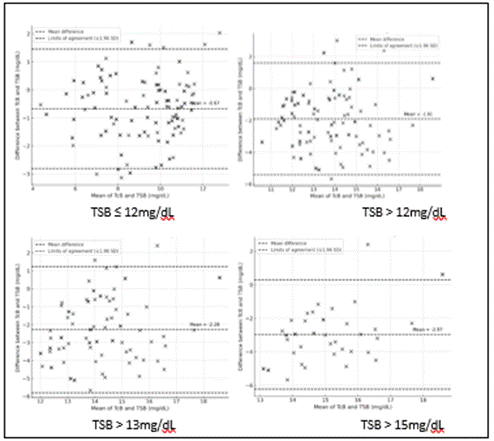
The mean
differences between TcB and TSB, stratified by TSB levels, were as follows: for
TSB ≤12 mg/dL, -0.67 mg/dL (95% CI: -2.80 to 1.45 mg/dL); for TSB >12 mg/dL,
-1.91 mg/dL (95% CI: -5.41 to 1.24 mg/dL); for TSB >13 mg/dL, -2.28 mg/dL
(95% CI: -5.80 to 1.24 mg/dL); and for TSB >15 mg/dL, -2.97 mg/dL (95% CI:
-6.22 to 0.29 mg/dL) (Figure 2).
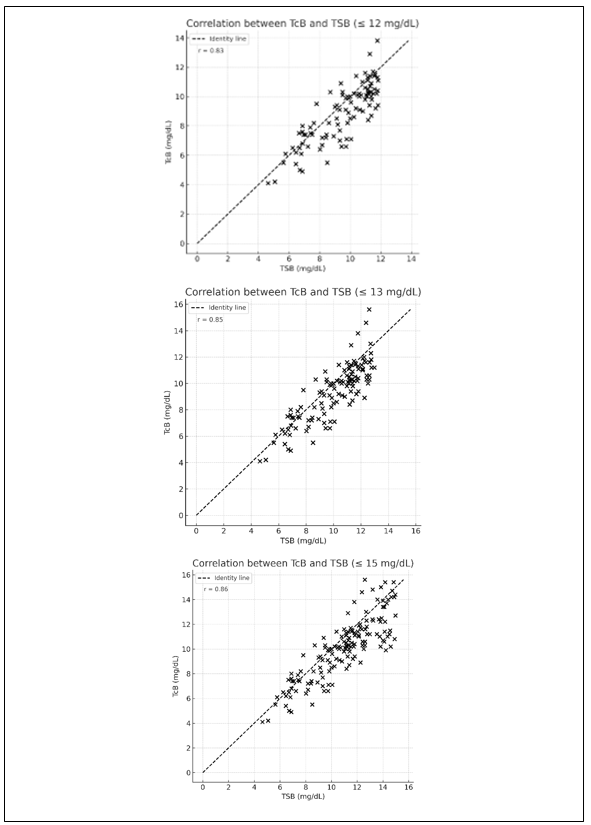
Agreement
between TSB and TcB measurements was also evaluated using the Intraclass
Correlation Coefficient (ICC). For TSB ≤12 mg/dL, ICC = 0.91 (95% CI: 0.87–0.94);
for TSB ≤13 mg/dL, ICC = 0.90 (95% CI: 0.87–0.93); and for TSB ≤15 mg/dL, ICC =
0.88 (95% CI: 0.84–0.91) (Figure 3).
Neonatal
jaundice is one of the most common clinical conditions occurring during the
transitional period after birth. Phototherapy is widely used to treat newborns
when total serum bilirubin (TSB) reaches high levels, to prevent a serious
condition called kernicterus.1-9 Therefore, early and accurate
diagnosis of neonatal jaundice is essential for appropriate treatment.1-4,8,20,21
Various neonatal consensus statements and studies recommend using
transcutaneous bilirubin (TcB) measurement as a non-invasive method to identify
newborns who will require TSB measurement before starting phototherapy.1-3,5,8,21
The AAP endorses the use of TcB as a valid and reliable method, particularly
when the TcB value is 3 mg/dL below the phototherapy threshold and when the TcB
value is below 15 mg/dL.21
In this
study, visual assessment of jaundice showed a low correlation with TSB
measurement, especially when jaundice was visually classified as Kramer zones 4
and 5. These findings align with the literature, which consistently reports
that visual assessment of jaundice alone is not a reliable screening method for
identifying significant neonatal hyperbilirubinemia.12,15,16,18 At
our institution, TcB devices are used routinely, generally following visual
assessment of jaundice. Contrary to our findings, Mishra et al. reported that
both visual assessment and TcB showed a significant correlation with TSB
values.25 In our study, neonatologists were the most accurate
assessors of jaundice, likely due to their greater professional experience
(median 14 years, IQR 7-20) compared to pediatricians (median 5 years, IQR 2-8)
and medical residents. Riskin et al.27 also reported that
neonatologists identified significant neonatal hyperbilirubinemia better than
experienced nurses. Previous studies suggest that the complete absence of
jaundice can also be used to predict with high accuracy that those infants will
not develop jaundice.18,21
This study
demonstrated a strong correlation between TcB and TSB measurements, a finding
also observed by several researchers.3,4,6,7,9,11,13,14,22,23
However, Speychal et al. reported poor agreement between the two methods.24
Our
results showed that TcB measurements underestimated TSB measurements. This
finding aligns with studies by Jones et al.,11 who observed that the
JM-105 bilirubinometer underestimated TSB values when used on the sternum of
Caucasian neonates, and Ohishi et al.,26 who revealed similar
underestimation in healthy Japanese newborns. Conversely, other studies reported
that TcB measurements overestimated TSB values.4,6,9,13,14,23,24
Overestimation can lead to unnecessary blood sampling and treatment, whereas
underestimation can delay necessary intervention and result in potentially
serious complications for these newborns.9,13
In this
study, the mean difference between TcB and TSB values was -1.21 mg/dL, with
limits of agreement ranging from -4.23 to 1.84 mg/dL. Jones et al.11
reported a mean difference of -0.21 mg/dL ± 1.15 mg/dL, whereas Ying et al.13
found a mean difference of 1.17 mg/dL (range: -2.22 to 4.56 mg/dL), and Esteban
et al.23 reported a mean difference of 1.72 ± 1.48 mg/dL.
Our
findings also showed that the higher the TSB values, the lower the accuracy of
TcB values. Bland-Altman analysis revealed good overall agreement between TcB
and TSB levels; however, as TSB levels increased, the discrepancy between TcB
and TSB levels widened. This has also been observed in other studies.11,13,23
In this
study, when TSB values exceeded 15 mg/dL, the mean difference between TcB and
TSB was -2.97 mg/dL, representing the largest negative bias observed among all
analyzed values. The range of limits of agreement was also considerably wider,
extending to more than 6 mg/dL below the TSB value. These findings indicate that
TcB becomes less reliable at high bilirubin levels, a conclusion supported by
AAP recommendations, which advise obtaining a TSB measurement when TcB values
exceed 15 mg/dL.21
Although
the Dräger JM-105 device requires a high initial investment (costing approximately
US$7,000), its use for TcB screening has been shown to reduce long-term costs
by decreasing hospital readmissions and the need for frequent blood draws –
benefits that also reduce physician workload and laboratory costs.5,11
Furthermore, these cost estimates do not account for non-monetary factors, such
as stress experienced by the infant and parents or potential complications
associated with blood sampling.11
This study
has some limitations. In daily clinical practice, jaundice assessments are
performed by physicians with varying levels of training and experience (as this
is a teaching hospital with pediatric and neonatology residency programs, and
physicians are hired via public civil service exams rather than based on
superior knowledge or experience with newborns), which may influence the
consistency of visual assessments. Although all transcutaneous bilirubin (TcB)
devices are regularly calibrated according to manufacturer recommendations, no
inter-device variability testing was performed, and potential discrepancies in
device performance cannot be ruled out. Finally, our study included only
jaundiced neonates requiring phototherapy, which limits the generalizability of
these findings to milder cases of jaundice that did not require treatment.
Furthermore, the study was conducted at a single tertiary care hospital, which
may reduce its external validity.
However,
this research has strengths, such as comparing the three methods used for
jaundice assessment within the same group of infants, thereby providing
comparative data. It also highlights the importance of healthcare services
investing in devices for neonatal jaundice assessment.
CONCLUSION
TcB
measurements showed good accuracy compared to TSB levels in healthy term
newborns and can be effectively used for neonatal jaundice screening. Although
TcB levels tend to underestimate TSB levels, their use offers significant
advantages, such as a reduction in invasive procedures, decreased stress for
the infant and family, and fewer unnecessary blood draws.
The extent
of jaundice based on cephalocaudal progression – clinically assessed using
Kramer zones – showed poor correlation with bilirubin levels; therefore, clinicians
should not rely on this method to estimate bilirubin concentrations in infants.
REFERENCES
1.
Ten
Kate L, Van Oorschot T, Woolderink J, Teklenburg-Roord S, Bekhof J.
Transcutaneous Bilirubin Accuracy Before, During, and After Phototherapy: A Meta-Analysis.
Pediatrics. 2023;152(6):e202362335.
2.
Olusanya
BO, Kaplan M, Hansen TW. Neonatal hyperbilirubinaemia: a global perspective.
Lancet Child Adolesc Health. 2018;2(8):610-20.
doi:10.1016/S2352-4642(18)30139-1
3.
Cat
FC, Cat A, Cicek T, Gulec SG. Evaluation of the Relationship Between
Transcutaneous Bilirubin Measurement and Total Serum Bilirubin in Neonatal
Patients Followed for Jaundice. Sisli Etfal Hastan Tip Bul. 202;55(2):262-7.
doi:10.14744/SEMB.2020.79837.
4.
Kumar
D, Kumar D. A Prospective Comparison of Serum and Transcutaneous Bilirubin in
Indian Neonates. J Pediatr Intensive Care. 2020;11(2):100-04.
doi:10.1055/s-0040-1721067.
5.
Okwundu
CI, Buthani VK, Uthman OA, Smith J, Olowoyeye A, Fiander M, et al.
Transcutaneous bilirubinometry for detecting jaundice in term or late preterm
neonates (Review). Cochrane Database Syst Rev. 2024;5(5):CD011060.
doi:10.1002/14651858.CD011060.pub2.
6.
Chokemungmeepisarn
P, Watcharee T, Shanika K, Monopunya S. Accuracy of BilicareTM transcutaneous
bilirubinometer as the predischarge screening tool for significant
hyperbilirubinemia in healthy term and late preterm neonates. J Matern Fetal
Neonatal Med. 2020;33(1):57-61. doi:10.1080/14767058.2018.1484098
7.
Okwundu
CI, Olowoyeye A, Uthman OA, Smith J, Wiysonge CS, Buthani VK, et al.
Transcutaneous bilirubinometry versus total serum bilirubin measurement for
newborns (Review). Cochrane Database Syst Rev. 2023;5(5):CD012660.
doi:10.1002/14651858.CD012660.pub2.
8.
Departamento
Científico de Neonatologia da Sociedade Brasileira de Pediatria.
Hiperbilirrubinemia indireta no período neonatal [Internet]. 2021 Sep
29. [Acesso em 2025 Nov 14]. Disponível em: https://www.spb.com.br/imprensa/detalhe/nid/hiperbilirrubinemia-indireta-no-periodo-neonatal/
.
9.
Alsaed
SA. Transcutaneous bilirubin measurement in healthy Saudi term newborns. Saudi
Med J. 2016;37(2):142-6. doi:10.15537/smj.2016.2.13419.
10.
Hulzebos
CV, Vitek L, Coda Zabetta CD, Dvořák A, Schenk P, van der Hagen EAE, et al.
Screening methods for neonatal hyperbilirubinemia: benefits, limitations,
requirements, and novel developments. Pediatr Res. 2021;90(2):272-6.
doi:10.1038/s41390-021-01543-1
11.
Jones
DF, McRea AR, Knowles JD, Lin FC, Burnette E, Reller LA, et al. A Prospective
Comparison of Transcutaneous and Serum bilirubin Within Brief Time Intervals.
Clin Pediatr (Phila). 2017;56(11):1013-7. doi:10.1177/0009922817701170.
12.
van
der Geest BAM, de Mol MJS, Barendse ISA, de Graaf JP, Bertens LCM, Poley MJ, et
al. Assessment, management, and incidence of neonatal jaundice in healthy
neonates cared for in a primary care: a prospective cohort study. Sci Rep.
2022;12(1):14385. doi:10.1038/s41598-022-17933-2.
13.
Ying
Q, You X, You J, Wang J. The accuracy of transcutaneous bilirubin to identify
hyperbilirubinemia in jaundice neonates. J Matern Fetal Neonatal Med.
2022;35(22):4318-25. doi:10.1080/14767058.2020.1849112
14.
Mohamed
M, Ibrahim NR, Ramli N, Majid NA, Yacob NM, Nasir A. Comparison between
Transcutaneous and Total Serum Bilirubin Measurement in Malay Neonates with
Neonatal Jaundice. Malays J Med Sci. 2022;29(1):43-54.
doi:10.21315/mjms2022.29.1.5.
15.
Lim
XJ, Ambigapathy S, Leong EL, Marmuji LZ, Phan AP, Hamdan FA, et al. Comparing
Kramer’s rule with transcutaneous bilirubin vs. Kramer’s rule only in reducing
total serum bilirubin sampling among neonates with jaundice. BMC Pediatr.
2025;25(1):169. doi:10.1186/s12887-025-05423-z.
16.
Moyer
VA, Ahn C, Sneed S. Accuracy of Clinical Judgment in Neonatal Jaundice. Arch
Pediatr Adolesc Med. 2000 Apr;154(4):391-4. doi:10.1001/archpedi.154.4.391.
17.
Kamphuis
ASJ, Bekhof J. Cephalocaudal progression of neonatal jaundice assessed by
transcutaneous bilirubin measurements. Early Hum Dev. 2021;160:105418.
doi:10.1016/j.earlhumdev.2021.105418.
18.
Keren
R, Tremont K, Luan X, Cnaan A. Visual assessment of jaundice in term and late
preterm infants. Arch Dis Chid Fetal Neonatal Ed. 2009;94(5):F317-22.
doi:10.1136/adc.2008.150714.
19.
Kramer
LI. Advancement of Dermal Icterus in the Jaundice Newborn. Amer J Dis Child.
1969;118(3):454-8. doi:10.1001/archpedi.1969.02100040456007.
20.
American
Academy of Pediatrics, Subcommittee on Hyperbilirubinemia. Clinical Practice
Guideline: Management of Hyperbilirubinemia in The New Born Infant 35 or More
Weeks of Gestation. Pediatrics. 2004;114(1):297-316.
21.
Kemper
AR, Newman TB, Slaugther JL, Maisels MJ, Watchko JF, Downs SM, et al. Clinical
Practice Guideline Revision: Management of Hyperbilirubinemia in The Newborn
Infant 35 or More Weeks of Gestation. Pediatrics. 2022;150(3):e2022058859.
doi:10.1542/peds.2022-058859.
22.
Chimhini
GLT, Chimhuya S, Chikwasha V. Evaluation of transcutaneous bilirubinometer
(DRAEGER JM 103) use in Zimbabwean newborn babies. Matern Health Neonatl
Perinatol. 2018;4:1. doi:10.1186/s40748-017-0070-0.
23.
Vidal
Esteban A, Becerra Fernández IC, Rivero Martin MJ. Correlation between
transcutaneous bilirubinometry and serum bilirubin in newborns ≥ 35 weeks.
Andes Pediatr. 2024;95(1):34-40. doi:10.32641/andespediatr.v95i1.4851.
24.
Speychal
FE, Pettersson M, Eriksson M, Odlind A, Ohlin A. Transcutaneous bilirubin in
newborns before, during, and after home phototherapy – Results from a secondary
analysis of a randomized controlled trial. PLoS One. 2025;20(3):e0320067.
doi:10.1371/journal.pone.0320067.
25.
Mishra
S, Chawla D, Agarwal R, Deorari AK, Paul VK, Buthani VK. Transcutaneous
bilirubinometry reduces the need for blood sampling in neonates with visible
jaundice. Acta Paediatr. 2009;98(12):1916-9.
doi:10.1111/j.1651-2227.2009.01505.x.
26.
Ohishi
A, Kondo M, Fujita T, Baba T, Iijima S. Accuracy of transcutaneous bilirubin
level measured by a JM-105 bilirubinometer. Pediatr Neonatol. 2023;64(1):32-7.
doi:10.1016/j.pedneo.2022.05.012.
27.
Riskin
A, Tamir A, Kugelman A, Hemo M, Bader D. Is Visual Assessment of Jaundice
Reliable as a Screening Tool to Detect Significant Neonatal Hyperbilirubinemia?
J
Pediatr. 2008;152(6):782-7. doi:10.1016/j.jpeds.2007.11.003.
Associate Editor:
Clarisse Pereira Dias Drumond Fortes
ORCID: https://orcid.org/0000-0002-8253-0501
Scientific Editor:
Fernanda Pinto Mariz
ORCID: https://orcid.org/0000-0002-6981-2352
Publisher:
Sociedade de Pediatria do Rio de
Janeiro – SOPERJ
E-mail: secretaria@soperj.org.br
Financial support:
None.
Availability of
research data:
The underlying content
of the research text is contained in the article.
Conflict of
interests:
None.
Authors’
contributions:
Marinho DH:
statistical analysis, data collection, conceptualization, resource management,
project management, investigation, methodology, writing – original draft,
writing – review and editing, software, supervision, validation, visualization.
Dos-Santos BM:
statistical analysis, data collection, conceptualization, resource management,
investigation, methodology, writing – original draft, writing – review and
editing, software, validation.
Nieto MLS:
statistical analysis, data collection, conceptualization, methodology, writing
– review and editing, validation.
da-Silva RPGVC:
writing – review and editing, supervision, validation, visualization.
da-Silva FS: writing
– review and editing, supervision, validation, visualization.