Figure 1. Pinkish stains on the fabric towel due to colonization by Serratia marcescens
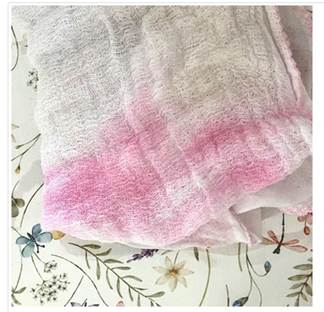
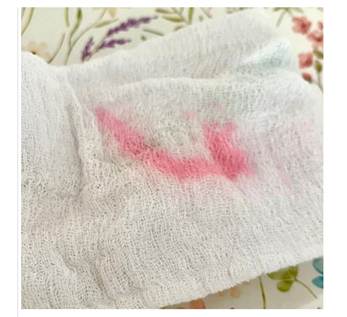
Figure 2. Pinkish spots of Serratia marcescens on the fabric towel
DOI: http://dx.doi.org/10.31365/issn.2595-1769.2026.0410
Pink breast milk: clinical implications and case report
Leite materno rosa: implicações clínicas e relato de caso
Leche materna rosada: implicaciones clínicas e informe de un caso
Nicholas Embleton 2
Ana Beatriz Gonçalves 3
1 Hospital das Clínicas da Faculdade de Medicina de Ribeirão Preto, Puericultura e Pediatria. Ribeirão Preto-SP, Brazil. Orcid: https://orcid.org/0009-0001-4350-5709
2 Newcastle University, Population Health Sciences Institute - Newcastle upon Tyne - Tyne and Wear, United Kingdom. Orcid: https://orcid.org/0000-0003-3750-5566
3 Hospital das Clínicas da Faculdade de Medicina de Ribeirão Preto, Puericultura e Pediatria. Ribeirão Preto-SP, Brazil. Orcid: https://orcid.org/0000-0003-0213-8479
Corresponding author:
Patricia da Silva Fernandes
E-mail: psfernandes@hcrp.usp.br
Submitted: 24/02/2026
Approved: 08/04/2026
ABSTRACT
Introduction: The composition of breast milk undergoes physiological variations throughout lactation; however, marked chromatic changes are rare and may signal pathological conditions. Pink-colored milk is an uncommon finding, generally associated with mammary traumas or colonization by pigmented microorganisms, such as Serratia marcescens. Objective: To report the case of a breastfed infant with inadequate weight gain associated with breast milk contamination by S. marcescens, highlighting the importance of early microbiological investigation and appropriate management to ensure neonatal safety and the continuity of breastfeeding. Case Description: We report the case of a breastfed infant with inadequate weight gain, whose mother identified pink coloration in the expressed milk and in the components of the breast pump. Microbiological investigation confirmed contamination by S. marcescens. Management included antibiotic therapy for the dyad (mother and infant) and rigorous reinforcement of hygiene measures, resulting in resolution of the color change and resumption of the growth curve ascent in the child. Discussion: The persistence of pink milk requires immediate microbiological investigation to rule out opportunistic pathogens. Inadequate weight gain in infants exposed to this condition should be interpreted as a critical warning sign, demanding thorough evaluation. Early identification of S. marcescens is fundamental for neonatal safety. Therapeutic conduct should be individualized, considering the presence of clinical repercussions or specific infectious risks, ensuring continuous support for the safe continuity of breastfeeding.
Keywords: Milk, Human; Breast Feeding; Serratia Marcescens; Infant; Case Report.
Introdução: A composição do leite materno sofre variações fisiológicas ao longo da lactação; contudo, alterações cromáticas acentuadas são raras e podem sinalizar condições patológicas. O leite de coloração rosada é um achado incomum, geralmente associado a traumas mamilares ou à colonização por microrganismos pigmentados, como a Serratia marcescens. Objetivo: Relatar o caso de uma lactente com ganho ponderal inadequado associado à contaminação do leite materno por S. marcescens, destacando a importância da investigação microbiológica precoce e do manejo adequado para garantir a segurança neonatal e a continuidade do aleitamento materno. Descrição do caso: Relata-se o caso de uma lactente com ganho ponderal inadequado, cuja mãe identificou coloração rosada no leite ordenhado e nos componentes da bomba de extração. A investigação microbiológica confirmou a contaminação por S. marcescens. O manejo incluiu antibioticoterapia para o binômio (mãe e lactente) e reforço rigoroso das medidas de higiene, resultando na resolução da alteração de cor e na retomada da ascensão na curva de crescimento da criança. Discussão: A persistência de leite rosado exige investigação microbiológica imediata para descartar patógenos oportunistas. O ganho ponderal inadequado em lactentes expostos a essa condição deve ser interpretado como um sinal de alerta crítico, demandando avaliação minuciosa. A identificação precoce da S. marcescens é fundamental para a segurança neonatal. A conduta terapêutica deve ser individualizada, considerando a presença de repercussões clínicas ou de riscos infecciosos específicos, assegurando suporte contínuo à continuidade segura do aleitamento materno.
Palavras-Chave: Leite Humano; Aleitamento Materno; Serratia Marcescens; Recém-Nascido; Relato de Caso.
Resumen
Introducción: La composición de la leche materna experimenta variaciones fisiológicas a lo largo de la lactancia; sin embargo, las alteraciones cromáticas marcadas son raras y pueden indicar afecciones patológicas. La leche rosada es un hallazgo poco común, generalmente asociado con traumatismos en el pezón o colonización por microorganismos pigmentados, como Serratia marcescens. Objetivo: Informar el caso de un lactante con aumento de peso insuficiente asociado a la contaminación de la leche materna por S. marcescens, destacando la importancia de la investigación microbiológica temprana y el manejo adecuado para garantizar la seguridad neonatal y la continuidad de la lactancia materna. Descripción del caso: Presentamos el caso de un lactante con aumento de peso insuficiente, cuya madre identificó una coloración rosada en la leche extraída y en los componentes del extractor de leche. La investigación microbiológica confirmó la contaminación por S. marcescens. El manejo incluyó terapia antibiótica para la madre y el lactante, así como el refuerzo riguroso de las medidas de higiene, lo que resultó en la resolución del cambio de color y la reanudación de la curva de crecimiento del niño. Discusión: La persistencia de leche rosada requiere una investigación microbiológica inmediata para descartar patógenos oportunistas. El aumento de peso insuficiente en lactantes expuestos a esta afección debe interpretarse como una señal de alerta crítica que requiere una evaluación exhaustiva. La identificación temprana de S. marcescens es fundamental para la seguridad neonatal. El tratamiento debe individualizarse, considerando la presencia de repercusiones clínicas o riesgos infecciosos específicos, garantizando un apoyo continuo para la continuación segura de la lactancia materna.
Palabras Clave: Leche Materna; Lactancia Materna; Serratia Marcescens; Recién Nacido; Caso Clínico.
Breast milk is a complex, dynamic, and highly specialized biological fluid whose composition continually adapts to the nutritional and immunological needs of the infant. Throughout lactation and even during breastfeeding itself, subtle variations in its appearance may occur, with shades ranging from translucent to opaque white or slightly yellowish, mainly due to changes in fat concentration. These physiological variations, however, tend to be subtle and do not produce intense chromatic alterations; thus, markedly pinkish colors are not part of the usual pattern of human milk.1,2
Pinkish breast milk is a rare, yet clinically significant phenomenon that generates significant anxiety in lactating mothers and represents a diagnostic challenge for healthcare professionals. Several factors may be associated with changes in milk color, including components of the maternal diet, the use of certain medications, or the presence of blood resulting from nipple fissures. However, when the pinkish coloration persists after the milk is refrigerated or kept at room temperature and there are no clinical signs of breast inflammation, the possibility of bacterial colonization, particularly by Serratia marcescens, should be considered.3,4
Serratia marcescens is a Gram-negative, motile, and opportunistic bacillus belonging to the Yersiniaceae family. A striking characteristic of many strains of this bacterium is the production of prodigiosin, a pigment responsible for an intense reddish-pink coloration. This pigment can permeate breast milk, as well as stain nursing pads, breast pump components, and other materials used during milking.3,5
Although many infants exposed to colonized milk remain asymptomatic, the genus Serratia is composed of recognized pathogens in Neonatal Intensive Care Units (NICUs), and can cause serious invasive infections such as sepsis and pneumonia.6-10 In addition to the acute infectious risk, recent evidence indicates that intestinal dominance by S. marcescens can induce significant dysbiosis, competing with beneficial commensal bacteria and altering the host’s energy metabolism.11,12 This imbalance in the neonatal microbiota has been associated with insufficient weight gain, making failure to thrive a relevant clinical indicator for the investigation and eradication of colonization.13,14
Written informed consent for the publication of clinical details and clinical images was obtained from the infant’s parents and is available upon request.
The research protocol was reviewed and approved by the Research Ethics Committee, in accordance with ethical standards for research involving human subjects (CAEE 95429426.9.0000.5440, dated 2/24/2026).
CASE DescriPTION
Female infant, born at term and with appropriate weight for gestational age (AGA), without complications in the prenatal or immediate neonatal period. The family history did not present relevant pathologies. In the first postnatal evaluation, a weight loss of 11.5% in relation to birth weight was detected. Although the infant kept a good general condition, without clinical evidence of infection or dehydration, weight gain was insufficient, which prompted detailed instructions to the mother on breastfeeding technique.
On the ninth day of life, the mother was diagnosed with chorioamnionitis, requiring hospital admission for manual intrauterine aspiration and intravenous antibiotic therapy (gentamicin, metronidazole and ciprofloxacin), completing the cycle with oral amoxicillin-clavulanate after discharge. Breastfeeding was maintained throughout the period. However, in subsequent outpatient follow-up, the child continued to have unsatisfactory weight gain. Speech therapy assessments ruled out functional sucking disorders or ankyloglossia, prompting the introduction of complementary milk formula for nutritional support.
At 33 days of age, the mother reported that, for about a week, the breast milk expressed via breast pump had a pinkish hue. Pinkish stains were also observed on milking utensils, cloths, and inside the bottle (Figures 1 and 2). The pinkish milk came from both breasts; initially with its usual appearance at the time of expression, becoming progressively pink after an interval of 6 to 24 hours. The mother did not
present signs of mastitis, fever, or nipple fissures, and denied the consumption of artificial dyes or medications that would justify the chromatic alteration.
Figure 1. Pinkish stains on the fabric towel due to colonization by Serratia marcescens
Figure 2. Pinkish spots of Serratia marcescens on the fabric towel
Given the clinical suspicion of contamination by Serratia marcescens, a microbiological investigation of breast milk and infant samples (feces, urine, and oropharyngeal swab) was carried out. The milk culture confirmed the growth of Serratia marcescens, identified by mass spectrometry (MALDI-TOF) after prolonged incubation in MacConkey medium. The antibiogram revealed sensitivity to sulfamethoxazole-trimethoprim (Figure 3). The infant’s cultures, however, were negative.
Figure 3. Results of culture and antibiogram of expressed breast milk showing identification of Serratia marcescens

Despite the absence of clinical signs of infection, the potential severity of Serratia marcescens in this age group prompted the adoption of maternal antibiotic therapy with ceftriaxone. As a precaution, temporary suspension of direct breastfeeding was recommended, while maintaining regular pumping to ensure the preservation of lactation.
During the breastfeeding suspension period, the fact that the residual formula also acquired a pinkish color corroborated the suspicion of colonization in the infant. Due to persistently borderline weight gain, despite supplementation, therapy with sulfamethoxazole-trimethoprim was instituted, based on the sensitivity profile of the breast milk culture. Although the infant did not present systemic signs of infection, the intervention aimed to eradicate Serratia marcescens from the digestive tract, under the premise that bacterial colonization could be a factor associated with unsatisfactory weight gain.
After five days of maternal treatment and seven days of infant treatment, complete remission of the color change was observed in the expressed milk and utensils. Clinically, this period marked the beginning of a progressive nutritional recovery, with an interruption of weight decline and a resumption of upward growth (Table 1).
Table 1. Weight evolution (weight for age, female sex, WHO) showing accelerated nutritional recovery in the second month (+42.8 g/day), after treatment of colonization by Serratia marcescens
|
Moment |
Age (days) |
Weight |
Weight gain (g/day) |
Percentile (WHO) |
Z-Score (WHO) |
|
Birth |
0 |
3,495g |
- |
P71 |
+0.55 |
|
33 |
33 |
3,620g |
3.8 |
P7 |
-1.48 |
|
62 |
62 |
4,860g |
42.8 |
P12 |
-1.17 |
Source: The authors.
Colonization by Serratia marcescens stands out as the classic cause and of epidemiological relevance.5,6 This opportunistic gram-negative bacillus produces the pigment prodigiosin, whose synthesis is regulated by thermosensitivity: production is optimized at ambient temperatures (~25°C) and inhibited at 37°C.5 This explains why milk has a physiological color during milking but develops a pinkish hue after resting or refrigeration.4,5 Pathogenesis frequently involves the formation of biofilms on lactation-assisted devices, such as breast pumps and storage containers.3,8
The clinical manifestations of S. marcescens exposure in infants range from benign to life-threatening conditions. significant. In addition to the classic finding of “pink diapers”, gastrointestinal symptoms such as diarrhea, vomiting, and irritability may occur.4,7 In more vulnerable settings, such as Neonatal Intensive Care Units (NICUs), the pathogen is associated with serious outcomes, including sepsis, meningitis, and pneumonia.5,8,9 The management of this colonization varies in the literature, ranging from guidelines on milk handling to the temporary disposal of the contaminated product.4 Although rigorous hygiene of the pumps is essential, its isolated effectiveness in the definitive elimination of the bacteria or in the prevention of recurrences after treatment still lacks robust evidence.10
From this perspective, recent evidence indicates that the intestinal dominance of this pathogen induces significant dysbiosis by competing with essential commensal genera, such as Bifidobacterium, altering the host’s energy metabolism.11 This mechanism may explain the low weight gain observed in some infants, since the integrity of the neonatal microbiota is crucial for proper development.12 Consequently, failure to thrive is a relevant clinical indicator for drug intervention, as corroborated by recent reports of pink milk in which bacterial eradication was imperative for the resumption of the weight curve.13,14 Therefore, the choice of therapy should be based on the resistance profile of the pathogen, ensuring effective control of symptomatic colonization.16
Rigorous diagnostic elucidation of the pink breast milk phenomenon is essential to ensure the continuity of breastfeeding and avoid unnecessary interruptions resulting from erroneous clinical interpretations. Recent scientific evidence indicates that colonization by Serratia marcescens may be associated with significant intestinal dysbiosis in infants, with repercussions on energy metabolism and weight gain. However, attributing isolated causality to bacterial colonization should be interpreted with caution, since weight deficit in young infants characteristically has a multifactorial etiology. In this context, therapeutic management should be individualized, considering the presence of specific clinical repercussions or infectious risks, prioritizing proper hygiene of extraction devices and continuous support for the safe continuation of breastfeeding.
REFERENCES
1. Ballard O, Morrow AL. Human milk composition: nutrients and bioactive factors. Pediatr Clin North Am. 2013;60(1):35-47.
2. Picciano MF. Nutrient composition of human milk. Pediatr Clin North Am. 2001;48(1):53-67.
3. Ayuzo del Valle C, Treviño Salinas E. Pink Breast Milk: Serratia marcescens Colonization. Breastfeed Med. 2014;9(10):510-1.
4. Quinn L, Ailsworth M, Matthews E, et al. Serratia marcescens Colonization Causing Pink Breast Milk and Pink Diapers. J Pediatr. 2018;195:289-290.
5. Ayuzo del Valle C, Treviño Salinas E. Pink Breast Milk: Serratia marcescens Colonization. Am J Perinatol Rep. 2014;4(2):101-104.
6. Jones J, Crete JE, Neumeier R. A Case Report of Pink Breast Milk. Breastfeed Med. 2014;9(8):417-8.
7. Ayuzo-del-Valle NC, Flores-Osorio X. ¡Leche materna de color rosa! Un caso de colonização por Serratia marcescens. Rev Mex Pediatr. 2024;91(1):28-30.
8. Faro R, et al. Premature termination of nursing secondary to Serratia marcescens breast pump contamination. Breastfeed Med. 2011;6(1):39-41.
9. Ogtrop M, et al. Serratia marcescens infections in neonatal departments. Eur J Pediatr. 1997;156(1):1-5.
10. Faro A, et al. Serratia marcescens outbreak in a neonatal intensive care unit. Infection Control. 2016.
11. Roux S, et al. Intestinal Dominance by Serratia among Neonates in an Outbreak. mSystems. 2021;6(6):e01131-21.
12. Lazar V, et al. Influence of a Serratia marcescens outbreak on gut microbiota in low-weight preterm neonates. PLOS ONE. 2019;14(5):e0216581.
13. Al-Sweedan SA, et al. Breast milk turning pink: a clue to Serratia marcescens colonization. Egypt J Pediatr Allergy Immunol. 2025;23(1).
14. Patidar A, et al. Breast milk turning pink: a clue to Serratia marcescens colonization—a case report. Gaz Egypt Paediatr Assoc. 2025;73:1.
15. Statler V, et al. A Pink Milk Bottle Mystery. Clin Pediatr (Phila). 2012;51(3):291-3.
16. Morillo SG, et al. Antimicrobial Treatment of Serratia marcescens Invasive Infections: Systematic Review. Antibiotics. 2023;12(3):367.
Scientific Editor:
Fernanda Pinto Mariz.
ORCID: https://orcid.org/0000-0002-6981-2352
Editor:
Sociedade de Pediatria do Rio de Janeiro – SOPERJ
E-mail de contato: secretaria@soperj.org.br
Financial support:
None.
Availability of research data:
The underlying content of the research text is contained in the article.
Conflict of interests:
None.
Authors’ contributions:
PS Fernandes: coleta de dados, conceitualização, redação - preparação do original, redação - revisão e edição.
N Embleton: supervisão.
AB Gonçalves: supervisão.
Rev Pediatria SOPERJ 2026;26(4): e20260410