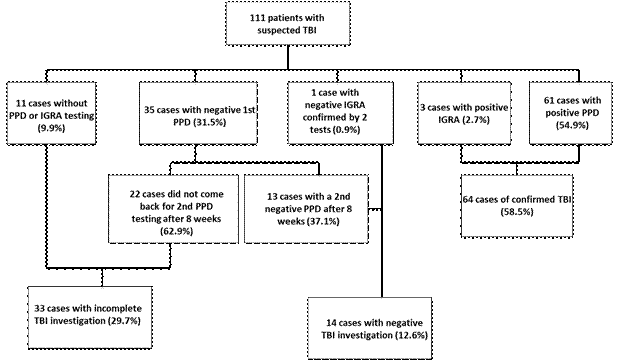
Figure 1 - Case selection flowchart
DOI: http://dx.doi.org/10.31365/issn.2595-1769.2026.0405
Pediatric Latent Tuberculosis in Santa Catarina: Clinical-Epidemiological Profile and Challenges at a Referral Center
Infecção tuberculosa latente pediátrica em Santa Catarina: perfil clínico-epidemiológico e desafios em serviço de referência
Infección tuberculosa latente en pediatría en Santa Catarina: perfil clínico-epidemiológico y desafíos en un centro de referencia
Isadora Durieux Lopes Destri 1
Cecilia Dias Giordano2
Emil Kupek3,4
Emanuela Rocha Carvalho5,6
1 Universidade Federal de Santa Catarina, Graduação Medicina – Florianópolis-SC, Brasil. ORCID:https://orcid.org/0000-0001-9373-5484
2 Universidade Federal de Santa Catarina, Graduação Medicina - Ararangua-SC, Brasil. ORCID:https://orcid.org/0009-0003-0491-7940
3 Universidade Federal de Santa Catarina, Docente Pós-graduação em Ciências Médicas – Florianópolis-SC;
4 Universidade Federal de Santa Catarina, Docente Saúde Pública – Florianópolis-SC, Brasil. ORCID:https://orcid.org/0000-0001-6704-1673
5 Universidade Federal de Santa Catarina, Docente Departamento Pediatria - Florianópolis-SC, Brasil.
6 Universidade Federal de Santa Catarina, Aluna Pós-graduação em Ciências Médicas – Florianópolis-SC, Brasil. ORCID:https://orcid.org/0000-0002-2193-0528
Corresponding author:
Emanuela Rocha Carvalho
E-mail: emanuela.carvalho@ufsc.br
Submitted: 07/01/2026
Approved: 13/02/2026
Abstract
Introduction: Tuberculosis is a major global public health issue, especially among children, who are more susceptible to severe forms of the disease. Oriented by international recommendations, Brazil has adopted screening and treatment of latent tuberculosis infection (LTBI) as a key strategy for disease control. Understanding the clinical-epidemiological characteristics of children with LTBI is essential for the success of this approach. Objective: To describe the clinical-epidemiological characteristics of children with LTBI at a referral hospital in southern Brazil. Methods: Retrospective, observational, and descriptive study analyzed medical records of patients aged 0-15 years diagnosed with LTBI between June 2020 and March 2024. Cases with positive tuberculin skin test or IGRA, without evidence of active tuberculosis, were included. Results: Among 64 analyzed cases, 54.69% were female and 42.19% were preschoolers. High loss to follow-up was observed (64% did not return after a non-reactive first test). The predominant profile was white children (85.94%) vaccinated with BCG (96.88%). Transmission occurred mainly through intrafamily household contact (79.69%), with the pulmonary form being the most frequent (89.06%) among index cases. The corrected LTBI prevalence was 73.21%, with drug resistance identified in 7.82% of contacts. Of the total, 41 patients adhered to the proposed conduct (64.06%), and loss of follow-up was registered in 22 cases (34,92%). Conclusion: LTBI showed higher prevalence in preschoolers and school-aged children, with predominantly household transmission. The findings highlight the need to strengthen epidemiological surveillance and active contact tracing to interrupt the chain of tuberculosis transmission.
Keywords: Tuberculosis; Latent Tuberculosis; Risk factors.
Introdução: A tuberculose é um importante problema de saúde pública global, especialmente em crianças, mais suscetíveis a formas graves. Alinhado a recomendações internacionais, o Brasil adotou a triagem e tratamento da infecção latente por tuberculose (ILTB) como estratégia fundamental para controle da doença. Conhecer as características clínico-epidemiológicas das crianças com ILTB é fundamental para o sucesso da medida. Objetivo: Descrever as características clínico-epidemiológicas de crianças com ILTB em um hospital de referência do sul do Brasil. Métodos: Estudo retrospectivo, observacional e descritivo, analisando prontuários de pacientes de 0 a 15 anos diagnosticados com ILTB entre junho/2020 e março/2024. Foram incluídos casos com prova tuberculínica ou IGRA positivos, sem evidência de tuberculose ativa. Resultados: Dos 64 casos analisados, 54,69% eram do sexo feminino e 42,19% pré-escolares. Observou-se alta perda de seguimento (64% não retornaram após primeiro teste não-reativo). O perfil predominante foi de crianças brancas (85,94%) e vacinadas com BCG (96,88%). A transmissão ocorreu principalmente por contato domiciliar intrafamiliar (79,69%), sendo a forma pulmonar a mais frequente (89,06%) nos casos-índice. A prevalência corrigida de ILTB foi de 73,21%, com resistência medicamentosa identificada em 7,82% dos contatos. Do total, 41 pacientes (64,06%) aderiram à conduta proposta, e registrou-se perda de seguimento em 22 casos (34,92%). Conclusão: A ILTB mostrou maior prevalência em pré-escolares e escolares, com transmissão predominantemente intradomiciliar. Os achados reforçam a necessidade de fortalecer a vigilância epidemiológica e a busca ativa de contatos para interromper a cadeia de transmissão tuberculosa.
Palavras-Chave: Tuberculose; Tuberculose Latente; Criança; Fatores de risco.
Resumen
Introducción: La tuberculosis representa un importante problema de salud pública mundial, especialmente en niños, quienes son más susceptibles a las formas graves. De acuerdo con las recomendaciones internacionales, Brasil ha adoptado el cribado y el tratamiento de la infección tuberculosa latente (ITBL) como estrategia fundamental para el control de la enfermedad. Conocer las características clínicas y epidemiológicas de los niños con ITBL es esencial para el éxito de esta medida. Objetivo: Describir las características clínicas y epidemiológicas de los niños con ITBL en un hospital de referencia del sur de Brasil. Métodos: Se realizó un estudio retrospectivo, observacional y descriptivo, analizando las historias clínicas de pacientes de 0 a 15 años diagnosticados con ITBL entre junio de 2020 y marzo de 2024. Se incluyeron los casos con prueba cutánea de tuberculina o IGRA positiva, sin evidencia de tuberculosis activa. Resultados: De los 64 casos analizados, el 54,69% eran mujeres y el 42,19% eran preescolares. Se observó una alta pérdida de seguimiento (el 64% no regresó tras la primera prueba no reactiva). El perfil predominante fue el de niños de raza blanca (85,94%) vacunados con BCG (96,88%). La transmisión se produjo principalmente por contacto intrafamiliar (79,69%), siendo la forma pulmonar la más frecuente (89,06%) en los casos índice. La prevalencia corregida de tuberculosis latente fue del 73,21%, con farmacorresistencia identificada en el 7,82% de los contactos. Del total, 41 pacientes (64,06%) se adhirieron al tratamiento propuesto, y se registraron pérdidas de seguimiento en 22 casos (34,92%). Conclusión: La tuberculosis latente mostró una mayor prevalencia en niños en edad preescolar y escolar, con transmisión predominantemente intradomiciliaria. Los hallazgos refuerzan la necesidad de fortalecer la vigilancia epidemiológica y el rastreo activo de contactos para interrumpir la cadena de transmisión de la tuberculosis.
Palabras Clave: Tuberculosis; Tuberculosis latente; Niño; Factores de riesgo.
INTRODUCTION
Due to its high dissemination and high mortality rates, tuberculosis (TB) is a serious public health problem with global impact, especially among vulnerable populations – such as children, who are more likely to present with extrapulmonary or disseminated forms of TB, associated with more severe diseases and higher mortality.1,2
In 2014, the World Health Organization (WHO) published “The End TB Strategy”, which aims for “a world free of TB: zero deaths, disease and suffering caused by TB”.3 In line with these goals, Brazil has issued guidelines4,5 aiming to prevent the spread of TB in the country. To this end, increased screening for latent tuberculosis infection (LTBI) and drug treatment of infected individuals have been the main strategies employed, considering the potential progression of LTBI to active TB and its role in perpetuating the chain of transmission.1,4,5
Identification and proper management of LTBI are particularly important in the pediatric population, especially among children under five years of age, due to their higher risk of progression to active TB and associated adverse outcomes.2 However, local data on the characteristics of this population are scarce. This study seeks to fill this gap by describing the clinical and epidemiological profile of LTBI in children aged 0 to 15 years treated at a reference hospital in Florianópolis, Santa Catarina state, southern Brazil, between June 2020 and March 2024.
This is an observational, descriptive, and retrospective study that analyzed electronic medical records of patients aged 0 to 15 years, treated between June 2020 and March 2024 for contact with and exposure to tuberculosis (ICD-10 Z20.1) at the infectious disease’s outpatient clinic of a pediatric referral hospital in the state of Santa Catarina, Brazil.
The study included patients diagnosed with LTBI, made from a tuberculin skin test (TST) with a result ≥ 5 mm or a positive IGRA (Interferon-Gamma Release Assay) test, in the absence of clinical symptoms or pulmonary radiological changes suggestive of active TB. Excluded from the study were patients without a history of contact with pulmonary or laryngeal TB, patients with active TB, patients with incomplete investigation or a negative test for LTBI, as well as patients who were still under clinical follow-up at the time of the study. No sample size calculation was performed a priori, since the study aimed to describe all consecutive cases of LTBI that met the eligibility criteria during the delimited research period (convenience sample or census of the period).
The main outcome of the study was the diagnosis of LTBI. The independent variables (exposures, predictors, and potential confounders) included demographic and epidemiological data. Among the demographic criteria, sex; ethnicity/skin color (self-reported or assigned, according to the classification of the Brazilian Institute of Geography and Statistics / Instituto Brasileiro de Geografia e Estatística - IBGE);6 macro-region of health of the State;7 and age group, categorized into groups with distinct relevance for disease progression and surveillance practices (0-29 days, 30 days to <2 years, 2-6, 6-10 and 10-14 years) were analyzed.8 Epidemiological data included the likely place of infection (household; school; other); household population density; Vaccination status with bacillus Calmette-Guérin (BCG), recorded in the vaccination card or through visualization of the vaccination scar; result of the HIV serological test; degree of kinship and type of TB of the index case; drug sensitivity profile of the index case and time elapsed between the start of treatment of the index case and the diagnosis of LTBI in the patient.
The data collected were analyzed using SPSS version 23.0. The 95% confidence intervals (CI) for the number of LTBI cases were calculated based on the exact Poisson distribution. To correct for partial verification bias related to patients with a negative first PT test who did not return for the second test, a statistical adjustment was performed, which is better described in the study results.
The potential for information bias inherent in retrospective studies based on medical records is also recognized. To minimize this bias, data collection was performed using a standardized and pre-coded electronic form. The data were tabulated and verified by two researchers, with no doubtful cases or conflicting information that required a third evaluation.
The study was approved by the hospital's Ethics Committee (protocol numbers 6.761.82 and CAAE 74270323.0.0000.5361), approved on April 12, 2024.
RESULTS
The initial sample consisted of 118 medical records, of which three were under follow-up at the time of the study; two had no history of contact with TB and therefore did not meet the study’s inclusion criteria for suspected LTBI; and the other two had active TB. These patients were excluded from the study, resulting in an analytical sample of 111 patients. The case definition algorithm is detailed in Figure 1.
Source: The authors, 2025
All 64 cases of LTBI with a positive result on the IGRA or PT test were clinically asymptomatic. Of these, 60 had an unchanged lung image (93.75%), while four had changes not suggestive of active TB (6.25%). Four diagnoses of LTBI were confirmed in the first half of 2020, 15 in 2021, 24 in 2022, and 21 in 2023.
The crude estimates of LTBI prevalence according to different risk factors are detailed in Table 1, whose analyses are descriptive. Most LTBI cases were female (54.69%). The predominant age groups were 2-5 (42.19%) and 6-9 years (28.13%), while the main ethnic group was white (85.94%). The vast majority resided in the state capital region (98.44%).
Table 1 - Percentage of individuals infected with LTBI according to risk factors with a 95% confidence interval
|
Risk factor |
Category |
N |
LTBI (%) |
CI 95% |
|
|
Inferior |
Superior |
||||
|
Age group |
Infant |
14 |
21.88 |
20.74 |
23.05 |
|
Preschooler |
27 |
42.19 |
40.61 |
43.80 |
|
|
Schooler |
18 |
28.13 |
26.84 |
29.45 |
|
|
Adolescent |
5 |
7.81 |
7.14 |
8.52 |
|
|
Race/color |
White |
55 |
85.94 |
83.60 |
88.20 |
|
Black |
4 |
6.25 |
5.65 |
6.89 |
|
|
Mixed race |
4 |
6.25 |
5.65 |
6.89 |
|
|
Ignored |
1 |
1.56 |
1.27 |
1.90 |
|
|
Sex |
Female |
35 |
54.69 |
52.89 |
56.52 |
|
Male |
29 |
45.31 |
43.67 |
46.99 |
|
|
Type of TB contact |
Pulmonary |
57 |
89.06 |
86.76 |
91.40 |
|
Larygeal |
3 |
4.69 |
4.17 |
5.24 |
|
|
Not informed |
4 |
6.25 |
5.65 |
6.89 |
|
|
Index case with drug-resistant TB |
None |
46 |
71.88 |
70.12 |
73.65 |
|
Isoniazid |
3 |
4.69 |
4.24 |
5.15 |
|
|
Multiple |
2 |
3.13 |
2.78 |
3.52 |
|
|
Not informed |
13 |
20.31 |
19.39 |
21.27 |
|
|
Received BCG vaccine |
No |
2 |
3.13 |
2.70 |
3.58 |
|
Yes |
62 |
96.88 |
94.47 |
99.31 |
|
|
HIV test |
Negative |
27 |
42.19 |
40.61 |
43.80 |
|
Not performed |
37 |
57.81 |
55.96 |
59.70 |
|
Source: The authors, 2025.
LTBI, latent tuberculosis infection; N, group size; CI, confidence interval; BCG, Bacillus Calmette-Guérin.
All cases, except for two, were vaccinated with BCG, indicating a vaccination coverage of almost 97%. Almost 30% of cases lacked information on the number of residents per household. In the 44 cases where this information was available in the medical record, more than 90% had between two and five residents in the household.
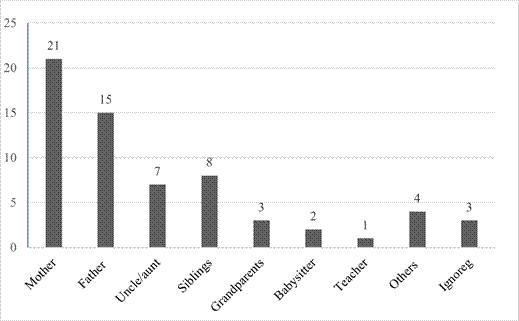
Most of the index cases were the patient’s parents (Figure 2) and had pulmonary TB (89.06%). Three contacts were isoniazid-resistant, two were multidrug-resistant (MDR-TB), and 13 did not have this information. The remaining 46 cases (71.88%) were sensitive to all medications used in standard treatment – isoniazid, rifampicin, ethambutol, and pyrazinamide.
Source: The authors, 2025.
The home was indicated as the most likely place of infection (79.69%). Investigation of other contacts besides patients diagnosed with LTBI was carried out in 45 (70.31%) of the cases. Serological testing for HIV was performed in 27 cases (42.19%) and produced negative results. However, most cases (57.81%) were not tested for HIV.
The time between the start of drug treatment in the index case and the diagnosis of the patient with LTBI was less than six months in 68.88% of cases, between six months and one year in 12.5%, between one and two years in 4.69%, and more than two years in 3.13% of LTBI cases.
The management for one of the patients with LTBI consisted of clinical follow-up for two years without drug treatment, since it was a contact of an MDR-TB case. The remaining 63 patients received medical recommendations to start treatment to prevent progression to active TB. The prescribed drug regimen was 6H (6 months of isoniazid) in 15 cases (23.81%), 4R (4 months of rifampicin) in 34 cases (53.97%), 3HP (3 months of isoniazid in combination with rifapentine) in 19 cases (30.16%), and 9H (9 months of isoniazid) in 1 case (1.59%). Forty (63.49%) of these patients manifestly used the regimen regularly throughout the entire proposed treatment period and did not progress to active TB. One patient used the treatment irregularly and progressed to active TB, which corresponds to 1.59% of the patients who received an indication to undergo treatment and 1.56% of the total sample. In 22 cases (34.92%), there was loss to follow-up.
Overall adherence to the proposed conduct – drug treatment or clinical follow-up – was 64.06% (41/64). All drug regimens were effective in preventing progression to active TB in patients who used the treatment correctly. The patient who was being followed up due to contraindication to treatment did not progress to active TB during the two-year evaluation period.
The partial verification bias in the investigation of LTBI (Figure 1) was adjusted as follows: (a) among 100 children suspected and screened for LTBI, 35 had a negative PPD, 1 a negative IGRA, 61 a positive PPD, and 3 a positive IGRA; (b) considering the high specificity of the IGRA test,⁸ negative IGRA results were accepted as definitive, as were repeated negative PPD results; (c) of the 35 initially negative PPD results, 13 (37.13%) were repeated and confirmed as negative, while 22 did not return for the second test; (a) it was assumed that the same proportion of 37.13% would be maintained if they had returned, resulting in an estimate of 8.17 (22 × 0.3713) additional negative results and, consequently, 13.83 remaining positive results; (d) adding the observed and estimated positive cases, a total of 77.83 (13.83 + 61 + 3) positive results is obtained in 100 suspected cases evaluated, which suggests that the 11 suspected cases without any laboratory test would add an estimated 8.56 (11 × 0.7783) cases of LTBI; (e) thus, the probable prevalence of LTBI among 118 suspected cases is 73.21%, calculated as {[(77.83 + 8.56) / 118] × 100}. The 95% confidence interval for this estimate ranged from 41.47% to 100%.
DISCUSSION
There was a high loss to follow-up rate during the investigation of suspected LTBI, with more than 60% of cases that had a non-reactive result on the PT not returning within eight weeks for a repeat test to assess possible tuberculin conversion. Another study, conducted at the same institution, evaluated patients treated for suspected LTBI between January 2011 and May 2020 and found a 48.6% loss to follow-up rate on the PT.9
The COVID-19 pandemic likely contributed to the high loss to follow-up, by hindering access to medical care for conditions unrelated to COVID-19, such as TB. The pandemic represented a major challenge to the fight against TB worldwide, resulting in underdiagnosis and underreporting. According to WHO estimates, only 57.4% of TB cases were diagnosed in 2020 worldwide, compared to 71% in 2019.10 A significant reduction in TB contact tracing during the pandemic was also recorded in Brazil.11,12
Between 2011 and 2020, the average number of diagnoses at the hospital in this study was approximately 11 cases per year. However, between June and December 2020, no cases of LTBI were diagnosed, likely due to a decline in contact tracing.9 In 2021, 15 diagnoses of LTBI were made – a 35% increase compared to the pre-pandemic period – likely reflecting underdiagnosis of infection in 2020.11,12
In 2022, there was a 60% increase in LTBI compared to 2021 and a 118.2% increase compared to the pre-pandemic period in the same hospital. This may be attributed both to improved diagnostic rates and to a real increase in the prevalence of LTBI, as observed globally.10,11 Between 2022 and 2023, there was a 12.5% reduction in the prevalence of latent infection, still within the expected variation of the temporal trend.
Higher levels of LTBI were found among children aged 2-5 and 6-9 years. This distribution can be attributed to the fact that the immune system of these children is still developing and, therefore, has not yet reached its full capacity to produce antibodies.13
The study also found that more than 80% of LTBI cases occurred in white children, reflecting the demographic composition of the region studied.14 However, social inequalities in access to health services cannot be ruled out, since vulnerable populations are at greater risk of exposure to TB due to poor housing conditions and higher population density in households.15
The predominance of LTBI cases residing in the state capital region is probably due to the concentration of specialized health services in the region.16 The Brazilian Ministry of Health recommends that the investigation and management of contacts with active pulmonary or laryngeal TB be carried out within a primary health care center, with only the most severe cases or those with technical difficulties being transferred to specialized clinics. Consequently, primary health care professionals, especially those in the Family Health Program, should be trained to diagnose and treat TB, thereby reducing its transmission.
The high BCG vaccine coverage observed in this study is consistent with data observed in the hospital and with the national target of 90% coverage.9,17 The vaccine is essential for TB control strategies, as it protects against more severe forms of the disease, such as extrapulmonary, miliary, and meningeal TB.4 However, BCG does not completely prevent the development of pulmonary TB – the most common and transmissible form of the disease – thus reinforcing the importance of investigating LTBI to ensure adequate treatment and prevent progression to active disease.1,4
Contact tracing investigation revealed that the likely source of infection for more than half of LTBI cases was a family member at home. In addition, the mother was the most frequent source of LTBI, reflecting her predominant role in childcare. The relationship between close contact and TB transmission is widely documented, especially in domestic settings, where there are greater intensity and duration of exposure to infection.18 Household population density also plays a role in the risk of TB transmission. The literature indicates that household overcrowding is one of the most significant risk factors for disease transmission in children.15,18
Most (79%) of the index cases investigated were responsive to the standard treatment regimen, in line with the national trend for 2024 regarding drug resistance for TB.11 Investigation of their contacts, in addition to the LTBI patients included in this study, was carried out for more than two-thirds of the latter. This investigation is part of the first pillar of the WHO’s “Strategy to End TB”;1,3,4 therefore, carrying it out systematically is crucial for its effective implementation.
Despite the known risk of TB progression in HIV-positive individuals, HIV testing was performed in less than half of the LTBI cases analyzed. TB treatment is recommended for all people living with HIV who are in contact with pulmonary or laryngeal TB, even if there are no positive PT or IGRA results. This highlights the importance of investigating the serological status of pediatric cases suspected of having LTBI infection, for timely treatment and prevention of the development of active disease.5
The time between treatment of TB in the index case and diagnosis of transmitted LTBI was less than six months in almost 70% of cases, with only 3% of cases diagnosed with LTBI after two years. The greatest risk of developing active TB occurs in the first two years after infection,4 highlighting the importance of timely investigation, diagnosis, and treatment to prevent progression to active TB.
The limitations of this study include its retrospective design based on electronic medical records, without the opportunity to correct incomplete information or inconsistencies in the data collected. In addition, a significant loss to follow-up was identified among suspected LTBI cases with initially non-reactive PT, but who did not return for a second PT test within eight weeks to rule out tuberculin conversion. Furthermore, data were not collected for the first half of 2020, thus underestimating the impact of the COVID-19 pandemic on LTBI diagnoses. Also, the study design fails to distinguish between underdiagnosis of LTBI in 2020, followed by a considerable increase in 2022, and a real increase in its prevalence in 2022. Finally, a large variation in the prevalence of LTBI after adjusting for partial verification bias indicates a great uncertainty in this estimate.
Generalization of our findings should be done with caution. This study was conducted in a single tertiary referral hospital located in the capital of a state in the Southern Region of Brazil, which attracts more complex cases and may not represent the reality of primary care or other regions of the country with different socioeconomic and demographic profiles. Therefore, the results are more directly applicable to similar contexts, i.e., to specialized referral services in large urban centers.
CONCLUSION
Most patients with confirmed LTBI were white (85.9%), and almost all (96.88%) had received the BCG vaccine. The most frequent primary source of infection was household contact with a family member (79.69%), usually with pulmonary TB (89.06%).
After correcting for partial verification of suspected LTBI cases lost to follow-up with the second PT test within eight weeks of the first negative PT test result, the prevalence of LTBI among suspected LTBI cases was 73.21% – a 25% increase from the uncorrected value.
Sixty-three patients were recommended to start drug treatment, and in one case, the approach was follow-up for two years to assess progression to active TB. Adherence to the proposed approach was 64.06%.
Finally, this study highlights that tuberculosis control in the pediatric population critically depends on interventions at the home setting. The centrality of intradomiciliary transmission and the high prevalence of LTBI found underscore the importance of ensuring the completeness of contact tracing and the timely provision of preventive treatment. Overcoming access barriers, symbolized by the significant loss to follow-up, is a public health challenge that demands integration between primary and specialized levels of care. Coordinated actions in this regard are imperative to prevent the progression of infection to the active form and, consequently, break the tuberculosis transmission cycle in Brazil.
REFERENCES
1. World Health Organization. WHO consolidated guidelines on tuberculosis: tuberculosis preventive treatment. Geneva: WHO; 2020
2. World Health Organization. Guidance for national tuberculosis programmes on the management of tuberculosis in children. 2nd ed. Geneva: WHO; 2014.
3. World Health Organization. United Nations General Assembly High-Level Meeting on the fight to end tuberculosis. New York; Sep 26, 2018.
4. Ministry of Health of Brazil. Secretariat of Health Surveillance. Department of Epidemiological Surveillance. Recommendations Manual for Tuberculosis Control in Brazil. Brasília (DF): Ministry of Health; 2019.
5. Ministry of Health of Brazil. Secretariat of Health Surveillance. Department of Chronic Diseases and Sexually Transmitted Infections. Surveillance protocol for latent Mycobacterium tuberculosis infection in Brazil. Brasília (DF): Ministry of Health; 2022.
6. Brazilian Institute of Geography and Statistics. National Classification Commission (CONCLA). Color or race: Brazil – 2015. Brasília (DF): IBGE; 2023. Available from: IBGE CONCLA
7. Santa Catarina State Health Department. Health regions [Internet]. Florianópolis: SES. Available from: Santa Catarina Health Department
8. Eduardo Marcondes, DVM Machado, N Setian, FR Carrazza. Growth and development. In: Basic Pediatrics. São Paulo: Sarvier; 1991.
9. LD Perini, AP Carvalho, MP Guchert, RV Marzola, SM Faria, ER Carvalho. Epidemiological analysis of patients with latent tuberculosis infection treated at a tertiary pediatric hospital in Florianópolis. Resid Pediatr. 2023;13(3). DOI: 10.25060/residpediatr-2023.v13n3-813. Accessed Jan 10, 2024.
10. World Health Organization. Global tuberculosis report 2022. Geneva: WHO; 2022. Available from: WHO TB Report 2022
11. Ministry of Health of Brazil. Secretariat of Health Surveillance and Environment. Tuberculosis epidemiological bulletin: special edition. Brasília (DF): Ministry of Health; Mar 2024. Available from: Tuberculosis Epidemiological Bulletin 2024
12. Ministry of Health of Brazil. Secretariat of Health Surveillance and Environment. Tuberculosis epidemiological bulletin in children and adolescents: special edition. Brasília (DF): Ministry of Health; Sep 2024.
13. Antonio Condino-Neto. Susceptibility to infections: immunological immaturity or immunodeficiency? Rev Med (São Paulo). 2014;93(2):78-82.
14. Brazilian Institute of Geography and Statistics. Demographic census 2022. Rio de Janeiro: IBGE; 2022.
15. Barbara Cobo, Celia Cruz, Paulo Cesar Dick. Gender and racial inequalities in access to and use of primary health care services in Brazil. Cienc Saude Colet. 2021;26(9):4021-4032.
16. Ministry of Health of Brazil. DATASUS: Notifiable Diseases Information System – Tuberculosis [Internet]. Brasília (DF): Ministry of Health. Available from: DATASUS Tuberculosis Database. Accessed Feb 26, 2025.
17. Ministry of Health of Brazil. National Immunization Program: national vaccination schedule. Brasília (DF): Ministry of Health; 2020.
18. R Basu Roy, et al. Tuberculosis susceptibility and protection in children. The Lancet Infectious Diseases. 2019;19(3):e96-e108.
Scientific editor:
Fernanda Pinto Mariz.
Orcid: https://orcid.org/0000-0002-6981-2352
Publisher:
Sociedade de Pediatria do Rio de Janeiro – SOPERJ
E-mail: secretaria@soperj.org.br
Financial support:
None.
Availability of research data:
The underlying content of the research text is contained in the article.
Conflict of interests:
None.
Authors’ contributions:
IDL Destri: data collection, research, writing - preparation of the original manuscript.
CD Giordano: data collection, writing - preparation of the original manuscript.
E Kupek: statistical analysis, methodology, writing - revision and editing, supervision.
E R Carvalho: statistical analysis, data collection, research, methodology, writing - revision and editing, supervision.
Rev Pediatria SOPERJ 2026;26(4): e20260405