DOI: http://dx.doi.org/10.31365/issn.2595-1769.2026.0387
Subclinical hypothyroidism in pediatrics: what does the clinician need to know?
Hipotireoidismo subclínico em pediatria: o que o clínico precisa saber?
Hipotiroidismo subclínico en pediatría: ¿Qué necesita saber el médico?
Lucas Dalvi Armond Rezende 1,2
Lorena Pádua de Moura Duarte 3
1Universidade Federal do Rio de Janeiro, Departamento de Endocrinologia. Programa de Pós-Graduação em Medicina (Endocrinologia) - Rio de Janeiro-RJ, Brazil.
2Centro Universitário Salesiano, Colegiado de Enfermagem - Vitória-ES, Brazil. ORCID: https://orcid.org/0000-0002-3313-852X
3Universidade Vila Velha, Departamento de Medicina - Vila Velha-ES, Brazil. ORCID: https://orcid.org/0000-0001-5962-3817
Corresponding author:
Lucas Dalvi Armond Rezende
E-mail: lucas.dalviar@gmail.com
Submitted: 30/08/2025
Approved: 09/12/2025
Abstract
Introduction: Subclinical hypothyroidism in children is characterized by elevated thyroid-stimulating hormone with normal free thyroxine. Although often transient, it can progress to overt hypothyroidism and have repercussions on growth, metabolism, and cardiovascular risk. Objective: To review clinical and therapeutic aspects of pediatric subclinical hypothyroidism, focusing on the indication for levothyroxine. Method: Reviews, meta-analyses, guidelines, and original studies from PubMed, SciELO, and Embase databases from the last 20 years, focused on pediatrics. Results: The baseline level of thyroid-stimulating hormone is the main predictor of progression. Mild and idiopathic cases tend to spontaneous remission, without significant impact on growth or cognition. Subclinical hypothyroidism associated with Hashimoto's thyroiditis has a higher risk of progression. Cardiovascular and bone findings are still uncertain. Levothyroxine use is indicated when thyroid-stimulating hormone is greater than 10 mIU/L. In mild cases (4.5–10 mIU/L), only clinical and laboratory follow-up is recommended. Conclusions: In most cases, pediatric subclinical hypothyroidism has a benign course. Treatment should be individualized, reserved for high-risk situations, prioritizing vigilance in mild cases.
Keywords: Hypothyroidism; Pediatrics; Thyroxine; Endocrine System Diseases.
Introdução: O hipotireoidismo subclínico em crianças caracteriza-se por elevação do hormônio estimulante de tireoide com tiroxina livre normal. Apesar de muitas vezes transitório, pode evoluir para hipotireoidismo manifesto e trazer repercussões no crescimento, metabolismo e risco cardiovascular. Objetivo: Revisar aspectos clínicos e terapêuticos do hipotireoidismo subclínico pediátrico, com foco na indicação de levotiroxina. Método: Revisões, metanálises, diretrizes e estudos originais das bases PubMed, Scielo e Embase dos últimos 20 anos, voltados para pediatria. Resultados: O nível basal de hormônio estimulante de tireoide é o principal preditor de evolução. Casos leves e idiopáticos tendem à remissão espontânea, sem impacto relevante em crescimento ou cognição. O hipotireoidismo subclínico associado à tireoidite de Hashimoto tem maior risco de progressão. Achados cardiovasculares e ósseos ainda são incertos. O uso de levotiroxina é indicado quando hormônio estimulante de tireoide maior que 10 mUI/L. Nos casos leves (4,5-10 mUI/L), recomenda-se apenas seguimento clínico-laboratorial. Conclusões: Na maioria dos casos, o hipotireoidismo subclínico pediátrico tem curso benigno. O tratamento deve ser individualizado, reservado a situações de risco, privilegiando vigilância nos quadros leves.
Palavras-Chave: Hipotireoidismo; Pediatria; Tiroxina; Doenças do Sistema Endócrino.
Resumen
Introducción: El hipotiroidismo subclínico en niños se caracteriza por niveles elevados de tirotropina con tiroxina libre normal. Aunque a menudo es transitorio, puede progresar a hipotiroidismo manifiesto y repercutir en el crecimiento, el metabolismo y el riesgo cardiovascular. Objetivo: Revisar los aspectos clínicos y terapéuticos del hipotiroidismo subclínico pediátrico, con especial atención a la indicación de levotiroxina. Método: Revisiones, metaanálisis, guías y estudios originales de las bases de datos PubMed, SciELO y Embase de los últimos 20 años, centrados en pediatría. Resultados: El nivel basal de tirotropina es el principal predictor de progresión. Los casos leves e idiopáticos tienden a la remisión espontánea, sin impacto significativo en el crecimiento ni la cognición. El hipotiroidismo subclínico asociado a tiroiditis de Hashimoto presenta un mayor riesgo de progresión. Los hallazgos cardiovasculares y óseos aún son inciertos. El uso de levotiroxina está indicado cuando la tirotropina es superior a 10 mUI/L. En casos leves (4,5-10 mUI/L), solo se recomienda seguimiento clínico y de laboratorio. Conclusiones: En la mayoría de los casos, el hipotiroidismo subclínico pediátrico tiene una evolución benigna. El tratamiento debe ser individualizado, reservado para situaciones de alto riesgo, priorizando la vigilancia en casos leves.
Palabras Clave: Hipotiroidismo; Pediatría; Tiroxina; Enfermedades del sistema endocrino.
Subclinical hypothyroidism (SH) is a biochemical disorder characterized by elevated serum levels of thyroid-stimulating hormone (TSH) above the upper limit of the reference range, while maintaining free thyroxine (fT4) levels within the normal range of the assay performed.1
This condition, also called compensated hypothyroidism or isolated hyperthyrotropinemia, has been interpreted by some authors as a mild form of thyroid insufficiency, due to the inverse log-linear relationship established between TSH and thyroid hormones.² According to the degree of TSH elevation, SH can be classified as mild, with TSH between 4.5 and 10 mIU/L, or severe, with TSH greater than 10 mIU/L.³
The prevalence of SH in adults varies between 4% and 20%, with a higher occurrence in women, elderly individuals, and people of Caucasian descent.³ In pediatric populations, SH is less frequent, with prevalence estimates around 1.7%.1
Furthermore, several studies in pediatric populations indicate that SH tends to have a benign and frequently remitting course, with a minimal risk of progression to overt hypothyroidism,4,5 in addition to maintaining a controversial association with adverse health outcomes. In this context, the benefits of levothyroxine (L-T4) treatment in children seem well established only in cases of severe SH, remaining uncertain in mild forms. Although the available evidence does not support the routine indication of hormone replacement in asymptomatic children with mild SH, the literature emphasizes the relevance of investigating possible subtle changes, since even slight elevations in serum TSH levels may be related to clinical repercussions.4
Thus, based on the clinical and epidemiological importance of SH, this article aimed to conduct a narrative review of the literature and examine the main factors that should be considered in the decision to initiate L-T4 treatment in children with HS. Furthermore, recommendations regarding clinical surveillance and periodic monitoring of thyroid function will be addressed. Publications in the PubMed, SciELO, and Embase databases from the last 20 years were reviewed, focusing on pediatric populations, including neonates.
These findings are corroborated by a cohort of children with mild and idiopathic HS treated with L-T4, in which post-therapy levels were determined mainly by baseline TSH values.8 Thus, L-T4 replacement is recommended for TSH above 10 mIU/L, remaining controversial for levels between 4.5 and 10 mIU/L.7 A meta-analysis of 11 prospective studies showed an increased cardiovascular risk only in HS above 10 mIU/L and no increase in total mortality in any other groups with milder HS, regardless of TSH values.10
The etiology of HS is a relevant factor in determining the natural course of thyroid function in children with this biochemical alteration. In particular, in the absence of underlying pathological disorders, HS has been described as a benign and often self-limiting condition.9 Evidence from the few available follow-up studies suggests that, in cases of mild idiopathic HS in the pediatric age group, the risk of progression to overt hypothyroidism is negligible.11 Moreover, the persistence of HS over time has not been shown to be associated with impairments in growth, body mass index (BMI), bone maturation, cognitive function, or other relevant clinical outcomes, even after periods of two to five years without treatment.12
In general, in two pediatric cohorts with mild HS, either idiopathic or associated with Hashimoto's thyroiditis, both with initial TSH values between 5 and 10 mIU/L, spontaneous normalization or stable maintenance of TSH after two years of follow-up was significantly more frequent in the group with idiopathic HS.11 In contrast, progression to TSH levels > A level of 10 mIU/L, with the consequent need for treatment with L-T4, occurred in a higher proportion among children with SH related to Hashimoto’s thyroiditis.12
CLINICAL MANIFESTATION AND DIAGNOSIS
The clinical evolution of SH in the pediatric population is quite variable, ranging from a complete absence of symptoms to the development of hypothyroidism with overt thyroid dysfunction. This heterogeneity appears to be related to factors such as age, individual sensitivity to thyroid hormone deficiency, and the duration of SH.4 When hypothyroidism develops, the most frequently described manifestations in children include goiter and growth retardation. Weight gain, fatigue, drowsiness, anemia, and elevated cholesterol levels may also occur.1 It should be noted that the severity of symptoms does not always correlate directly with serum TSH concentrations.13
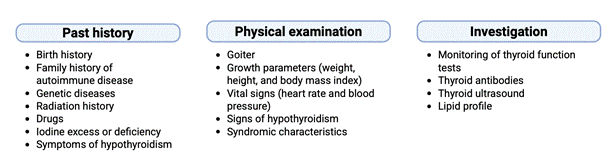
The diagnosis of SH is based on serum TSH and fT4 levels,14 and it is recommended that these tests be repeated in 2 to 3 months for confirmation.4 The investigation should be complemented by the search for thyroid autoantibodies (anti-thyroperoxidase antibody and anti-thyroglobulin antibody) and by thyroid ultrasound, since the characteristic pattern of autoimmune or Hashimoto’s thyroiditis may precede the appearance of autoantibodies.15 Thyroid ultrasound has become established as a useful tool in the evaluation of persistent cases of SH, especially to identify the etiology. Furthermore, elevated TSH levels in children with thyroid nodules have been identified as predictors of malignancy, reinforcing the role of ultrasound as a follow-up method in both treated patients and those under clinical observation.1,16 Figure 1 summarizes the assessment of SH in children.
Figure 1: History, physical examination, and imaging and laboratory investigation of subclinical hypothyroidism in children
Source: The authors (2025).
LONG-TERM CONSEQUENCES OF subclinical hypothyroidism
In adults, subclinical hypothyroidism has been associated with several cardiovascular risk factors and cardiovascular disease itself, such as hypertension, dyslipidemia, increased epicardial adipose tissue, carotid intima-media thickening, and endothelial dysfunction. These effects may be related to activation of the renin-angiotensin-aldosterone system, increased vasoconstriction and sympathetic activity, as well as reduced renal blood flow and glomerular filtration rate.19
Changes in the lipid profile, especially elevated low-density lipoprotein cholesterol (LDL-c), as well as endothelial dysfunction, improve with L-T4 replacement in adults.20 In addition, greater insulin resistance has been described in adult women with polycystic ovary syndrome associated with subclinical hypothyroidism, as well as a correlation with metabolic syndrome, although without a significant reduction in BMI after treatment of the underlying disease.21
Endothelial dysfunction, considered an early and potentially reversible event of vascular impairment, is widely used as a predictive marker of coronary artery disease even before the establishment of atherosclerotic changes. Flow-mediated dilation (FMD), obtained through ultrasound, is currently a non-invasive and validated method for assessing this function.22 In parallel, epicardial fat thickness (EFT) has become established as a sensitive and reliable marker of cardiovascular risk, in addition to emerging as a promising target for therapeutic interventions.23
To date, only one study, conducted by Farghaly et al.,24 has jointly investigated FMD and EFT in 32 children with mild SH secondary to Hashimoto’s thyroiditis. The results showed higher EFT values and reduced FMD responses in these patients compared to the control group, as well as a significant correlation between higher EFT and worse endothelial function, suggesting a possible role of SH in increasing early cardiovascular risk.
In children, SH has been associated with an increased risk of hypertension.17 Regarding ventricular function, however, available studies present divergent results, with no consensus on the real impact of the condition.18
2. Childhood growth and bone (de)mineralization
Low bone mass or osteoporosis can occur in children and adolescents affected by various chronic conditions, either as a result of the progression of the disease itself or of factors associated with treatment.25-27 Among the most relevant causes are those of endocrine origin, such as hypogonadism, Cushing’s syndrome, growth hormone deficiency, hyperparathyroidism, and thyroid disorders, all recognized as important triggers of low bone mineral density (BMD) and secondary osteoporosis.28
Both hyperthyroidism and hypothyroidism can result in BMD loss, affecting bone remodeling through dysregulation of endochondral ossification and osteoclastogenesis.29 Excessive levels of thyroid hormone (TH) exert a direct effect on bone resorption, through mechanisms mediated by cytokines and the adenosine monophosphate cycle, in addition to increasing the sensitivity of β-adrenergic receptors and bone cells to catecholamines and the hormone. parathyroid.30,31
Conversely, TH deficiency is associated not only with growth retardation and persistent short stature, but also with a reduction in the rate of bone remodeling, due to the disruption of endochondral ossification, characterized by delays in bone formation and resorption processes.30,31
The influence of abnormal TH and TSH levels, both in subclinical conditions and in hypothyroidism, on BMD in children and adolescents remains controversial. Although the expression of TSH receptors in chondrocytes, osteoblasts, and osteoclasts suggests direct action of this hormone on cartilage and bone, its action is still uncertain, since TSH can exert both stimulatory and inhibitory effects on osteoblastogenesis and osteoclastogenesis, mediated by factors such as TNF-α, RANKL, and osteoprotegerin.32
In addition, the main expression sites of TH receptors include proliferative chondrocytes, bone marrow stromal cells, and osteoblasts, which reinforces the fundamental role of thyroid hormones in the coordinated progression of endochondral ossification and cartilaginous matrix mineralization. However, the exact mechanisms of this interaction are not yet fully elucidated.32,33
TREATMENT
The indication for treatment in children with SH is still controversial, especially regarding the TSH threshold that should motivate intervention.1 The clinical approach should be personalized, taking into account the patient’s age, clinical and laboratory manifestations, severity of the TSH increase, underlying cause, progression to thyroid dysfunction, and the presence of associated syndromes.4
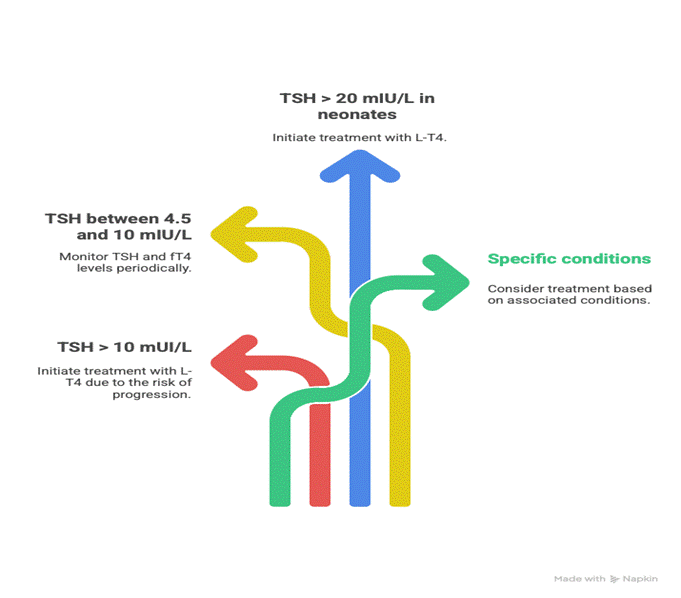
In general, there is consensus on treating children with TSH above 10 mIU/L, regardless of etiology, especially those with Hashimoto’s thyroiditis and signs of progression of thyroid dysfunction.4 In contrast, the management of children with mild SH (TSH between 4.5 and 10 mIU/L) remains controversial, and individualized follow-up is recommended. In these cases, periodic monitoring of TSH and fT4 every six months is suggested, complemented by annual evaluation of thyroid autoantibodies and thyroid ultrasound. Such surveillance is particularly important in patients with chromosomal abnormalities, such as Turner or Down syndromes, or with autoimmune diseases, due to the increased risk of progression to clinical hypothyroidism.4
In the neonatal period, investigation is recommended starting with TSH greater than or equal to 10 mIU/L in the neonatal screening test and initiation of treatment after venous confirmation. In addition, immediate initiation of treatment with L-T4 is indicated when TSH levels in the newborn screening test are above 20 mIU/L.34-36
Some situations deserve highlighting regarding the treatment of SH with TSH greater than 10 mIU/L. In children with iron deficiency associated with SH and TSH levels above 10 mIU/L, L-T4 replacement enhances the response to iron deficiency treatment.37 Patients with nephrotic syndrome and SH may benefit from thyroid therapy to prevent deterioration of gland function and minimize deleterious effects on body balance.38 In addition, children using medications such as anticonvulsants or interferon-α should receive L-T4 when TSH is above 10 mIU/L, maintaining replacement until the drug is discontinued.39,40
Finally, in cases of persistent SH associated with diffuse or nodular goiter, L-T4 replacement is recommended to normalize TSH levels and reduce the risk of developing thyroid carcinoma.41 Figure 2 summarizes the main evidence discussed above.
CONCLUSION
In the pediatric population, unlike that observed in adults, SH generally presents a benign and self-limiting course, with a low risk of progression to overt hypothyroidism. Although in adults SH is associated with cardiovascular repercussions and bone demineralization, such findings are not consistently observed in children, which reinforces the lack of robust evidence of organ involvement in this age group. In this context, the indication for treatment with L-T4 remains controversial, being recommended only in specific situations, such as persistently higher TSH than 10 mIU/L, presence of clinical symptoms, autoimmune thyroiditis, associated genetic syndromes, or increased risk of progression to clinical hypothyroidism.
The most appropriate approach, therefore, in most mild and asymptomatic cases, is periodic clinical and laboratory follow-up, with monitoring of serum TSH and fT4 levels and appropriate etiological investigation. This individualized approach allows for balancing the potential benefits of hormone replacement therapy with the possibility of spontaneous remission, preserving thyroid function and the child’s overall development.
1. Crisafulli G, Aversa T, Zirilli G, Pajno GB, Corica D, De Luca F, Wasniewska M. Subclinical hypothyroidism in children: when a replacement hormonal treatment might be advisable. Front Endocrinol [Internet]. 25 fev 2019 [citado 28 ago 2025];10. https://doi.org/10.3389/fendo.2019.00109
2. Bissell MG. Inverse log-linear relationship between thyroid-stimulating hormone and free thyroxine measured by direct analog immunoassay and tandem mass spectrometry. Yearb Pathol Lab Med [Internet]. Jan 2012 [citado 28 ago 2025];2012:288-9. https://doi.org/10.1016/j.ypat.2011.08.009
3. Metwalley KA, Farghaly HS. Subclinical hypothyroidism in children: updates for pediatricians. Ann Pediatr Endocrinol Amp Metab [Internet]. 30 jun 2021 [citado 27 ago 2025];26(2):80-5. https://doi.org/10.6065/apem.2040242.121
4. Salerno M, Capalbo D, Cerbone M, De Luca F. Subclinical hypothyroidism in childhood — current knowledge and open issues. Nat Rev Endocrinol [Internet]. 1 jul 2016 [citado 27 ago 2025];12(12):734-46. https://doi.org/10.1038/nrendo.2016.100
5. Monzani A, Prodam F, Rapa A, Moia S, Agarla V, Bellone S, Bona G. Natural history of subclinical hypothyroidism in children and adolescents and potential effects of replacement therapy: a review. Eur J Endocrinol [Internet]. Jan 2013 [citado 28 ago 2025];168(1):R1—R11. https://doi.org/10.1530/eje-12-0656
6. Gallizzi R, Crisafulli C, Aversa T, Salzano G, De Luca F, Valenzise M, Zirilli G. Subclinical hypothyroidism in children: is it always subclinical? Ital J Pediatr [Internet]. 17 fev 2018 [citado 27 ago 2025];44(1). https://doi.org/10.1186/s13052-018-0462-4
7. Karmisholt J, Andersen S, Laurberg P. Variation in thyroid function in subclinical hypothyroidism: importance of clinical follow-up and therapy. Eur J Endocrinol [Internet]. Mar 2011 [citado 28 ago 2025];164(3):317-23. https://doi.org/10.1530/eje-10-1021
8. Wasniewska M, Corrias A, Aversa T, Valenzise M, Mussa A, De Martino L, Lombardo F, De Luca F, Salerno M. Comparative evaluation of therapy with l-thyroxine versus no treatment in children with idiopathic and mild subclinical hypothyroidism. Horm Res Paediatr [Internet]. 2012 [citado 28 ago 2025];77(6):376-81. https://doi.org/10.1159/000339156
9. Cerbone M, Bravaccio C, Capalbo D, Polizzi M, Wasniewska M, Cioffi D, Improda N, Valenzise M, Bruzzese D, De Luca F, Salerno M. Linear growth and intellectual outcome in children with long-term idiopathic subclinical hypothyroidism. Eur J Endocrinol [Internet]. Abr 2011 [citado 28 ago 2025];164(4):591-7. https://doi.org/10.1530/eje-10-0979
10. Rodondi N, den Elzen WP, Bauer DC, Cappola AR, Razvi S, Walsh JP, Åsvold BO, Iervasi G, Imaizumi M, Collet TH, Bremner A, Maisonneuve P, Sgarbi JA, Khaw KT, Vanderpump MP, Newman AB, Cornuz J, Franklyn JA, Westendorp RG, Vittinghoff E, Gussekloo J, Thyroid Studies Collaboration FT. Subclinical hypothyroidism and the risk of coronary heart disease and mortality. Jama [Internet]. 22 set 2010 [citado 28 ago 2025];304(12):1365. https://doi.org/10.1001/jama.2010.1361
11. Wasniewska M, Aversa T, Salerno M, Corrias A, Messina MF, Mussa A, Capalbo D, De Luca F, Valenzise M. Five-year prospective evaluation of thyroid function in girls with subclinical mild hypothyroidism of different etiology. Eur J Endocrinol [Internet]. Dez 2015 [citado 29 ago 2025];173(6):801-8. https://doi.org/10.1530/eje-15-0484
12. Aversa T, Valenzise M, Corrias A, Salerno M, De Luca F, Mussa A, Rezzuto M, Lombardo F, Wasniewska M. Underlying hashimoto's thyroiditis negatively affects the evolution of subclinical hypothyroidism in children irrespective of other concomitant risk factors. Thyroid [Internet]. Fev 2015 [citado 29 ago 2025];25(2):183-7. https://doi.org/10.1089/thy.2014.0235
13. Lee YJ, Jung SY, Jung HW, Kim SY, Lee YA, Lee SY, Shin CH, Yang SW. Unfavorable course of subclinical hypothyroidism in children with Hashimoto’s thyroiditis compared to those with isolated non-autoimmune hyperthyrotropinemia. J Korean Med Sci [Internet]. 2017 [citado 29 ago 2025];32(1):124. https://doi.org/10.3346/jkms.2017.32.1.124
14. Biondi B, Cappola AR, Cooper DS. Subclinical hypothyroidism. Jama [Internet]. 9 jul 2019 [citado 29 ago 2025];322(2):153. https://doi.org/10.1001/jama.2019.9052
15. Chaudhary V, Bano S. Thyroid ultrasound. Indian J Endocrinol Metab [Internet]. 2013 [citado 29 ago 2025];17(2):219. https://doi.org/10.4103/2230-8210.109667
16. Pittock S. Thyroid nodules [Internet]. Cham: Springer International Publishing; 2017. Thyroid nodules in children; [citado 29 ago 2025]; p. 207-31. https://doi.org/10.1007/978-3-319-59474-3_14
17. Ittermann T, Thamm M, Wallaschofski H, Rettig R, Völzke H. Serum thyroid-stimulating hormone levels are associated with blood pressure in children and adolescents. J Clin Endocrinol Amp Metab [Internet]. 1 mar 2012 [citado 29 ago 2025];97(3):828-34. https://doi.org/10.1210/jc.2011-2768
18. Çatlı G, Kır M, Anık A, Yılmaz N, Böber E, Abacı A. The effect of L-thyroxine treatment on left ventricular functions in children with subclinical hypothyroidism. Arch Dis Child [Internet]. 10 set 2014 [citado 29 ago 2025];100(2):130-7. https://doi.org/10.1136/archdischild-2014-306381
19. Sue LY, Leung AM. Levothyroxine for the treatment of subclinical hypothyroidism and cardiovascular disease. Front Endocrinol [Internet]. 21 out 2020 [citado 29 ago 2025];11. https://doi.org/10.3389/fendo.2020.591588
20. Yao K, Zhao T, Zeng L, Yang J, Liu Y, He Q, Zou X. Non-invasive markers of cardiovascular risk in patients with subclinical hypothyroidism: A systematic review and meta-analysis of 27 case control studies. Sci Rep [Internet]. 15 mar 2018 [citado 29 ago 2025];8(1). https://doi.org/10.1038/s41598-018-22897-3
21. Urgatz B, Razvi S. Subclinical hypothyroidism, outcomes and management guidelines: a narrative review and update of recent literature. Curr Med Res Opin [Internet]. 12 jan 2023 [citado 29 ago 2025]:1-47. https://doi.org/10.1080/03007995.2023.2165811
22. Tacito LH, Pires AC, Yugar-Toledo JC. Impaired flow-mediated dilation response and carotid intima-media thickness in patients with type 1 diabetes mellitus with a mean disease duration of 4.1 years. Arch Endocrinol Metab [Internet]. 13 jul 2017 [citado 29 ago 2025];61(6):542-9. https://doi.org/10.1590/2359-3997000000281
23. Iacobellis G. Epicardial adipose tissue [Internet]. Cham: Springer International Publishing; 2020. Coronary artery disease and epicardial adipose tissue; [citado 29 ago 2025]; p. 77-90. https://doi.org/10.1007/978-3-030-40570-0_8
24. Farghaly HS, Metwalley KA, Raafat DM, Algowhary M, Said GM. Epicardial fat thickness in children with subclinical hypothyroidism and its relationship to subclinical atherosclerosis: a pilot study. Horm Res Paediatr [Internet]. 2019 [citado 29 ago 2025];92(2):99-105. https://doi.org/10.1159/000503287
25. Ahn MB, Suh BK. Bone morbidity in pediatric acute lymphoblastic leukemia. Ann Pediatr Endocrinol Amp Metab [Internet]. 31 mar 2020 [citado 29 ago 2025];25(1):1-9. https://doi.org/10.6065/apem.2020.25.1.1
26. Ko A, Kong J, Samadov F, Mukhamedov A, Kim YM, Lee YJ, Nam SO. Bone health in pediatric patients with neurological disorders. Ann Pediatr Endocrinol Amp Metab [Internet]. 31 mar 2020 [citado 29 ago 2025];25(1):15-23. https://doi.org/10.6065/apem.2020.25.1.15
27. Yang HR. Updates on bone health in children with gastrointestinal diseases. Ann Pediatr Endocrinol Amp Metab [Internet]. 31 mar 2020 [citado 29 ago 2025];25(1):10-4. https://doi.org/10.6065/apem.2020.25.1.10
28. Simm PJ, Biggin A, Zacharin MR, Rodda CP, Tham E, Siafarikas A, Jefferies C, Hofman PL, Jensen DE, Woodhead H, Brown J, Wheeler BJ, Brookes D, Lafferty A, Munns CF. Consensus guidelines on the use of bisphosphonate therapy in children and adolescents. J Paediatr Child Health [Internet]. Mar 2018 [citado 29 ago 2025];54(3):223-33. https://doi.org/10.1111/jpc.13768
29. Lee YA, Kwon A, Kim JH, Nam HK, Yoo JH, Lim JS, Cho SY, Cho WK, Shim KS. Clinical practice guidelines for optimizing bone health in Korean children and adolescents. Ann Pediatr Endocrinol Amp Metab [Internet]. 31 mar 2022 [citado 29 ago 2025];27(1):5-14. https://doi.org/10.6065/apem.2244060.030
30. Tuchendler D, Bolanowski M. The influence of thyroid dysfunction on bone metabolism. Thyroid Res [Internet]. Dez 2014 [citado 29 ago 2025];7(1). https://doi.org/10.1186/s13044-014-0012-0
31. Dhanwal D. Thyroid disorders and bone mineral metabolism. Indian J Endocrinol Metab [Internet]. 2011 [citado 29 ago 2025];15(6):107. https://doi.org/10.4103/2230-8210.83339
32. Bassett JH, Williams GR. Role of Thyroid Hormones in Skeletal Development and Bone Maintenance. Endocr Rev [Internet]. 1 abr 2016 [citado 29 ago 2025];37(2):135-87. https://doi.org/10.1210/er.2015-1106
33. Veldscholte K, Barjaktarovic M, Trajanoska K, Jaddoe VW, Visser TJ, de Rijke YB, Peeters RP, Rivadeneira F, Korevaar TI. The association of thyroid function with bone density during childhood. J Clin Endocrinol Amp Metab [Internet]. 17 jul 2018 [citado 29 ago 2025];103(11):4125-34. https://doi.org/10.1210/jc.2018-00294
34. Deladoëy J, Ruel J, Giguère Y, Van Vliet G. Is the incidence of congenital hypothyroidism really increasing? A 20-year retrospective population-based study in québec. J Clin Endocrinol Amp Metab [Internet]. Ago 2011 [citado 29 ago 2025];96(8):2422-9. https://doi.org/10.1210/jc.2011-1073
35. Buluş AD, Tiftik E. Evaluation of neurodevelopment of children with congenital hypothyroidism by the Denver Developmental Screening Test. J Pediatr Endocrinol Metab [Internet]. 1 jan 2017 [citado 29 ago 2025];30(10). https://doi.org/10.1515/jpem-2016-0188
36. Sociedade Brasileira de Pediatria. Departamento Científico de Endocrinologia. Hipotireoidismo congênito: triagem neonatal. Porto Alegre: SBP; 2018.
37. Demir C, Gökdeniz E, Dilek İ. The effects of iron deficiency anemia on the thyroid functions. J Clin Exp Investig [Internet]. 17 dez 2010 [citado 29 ago 2025];1(3). https://doi.org/10.5799/ahinjs.01.2010.03.0033
38. Benvenga S, Vita R, Di Bari F, Fallahi P, Antonelli A. Do not forget nephrotic syndrome as a cause of increased requirement of levothyroxine replacement therapy. Eur Thyroid J [Internet]. 2015 [citado 29 ago 2025];4(2):138-42. https://doi.org/10.1159/000381310
39. Karlsson FA, Burman P, Öberg K, Karlsson-Parra A. Autoimmune thyroiditis [Internet]. Berlin, Heidelberg: Springer Berlin Heidelberg; 1991. Thyroid autoimmunity induced by interferon therapy; [citado 29 ago 2025]; p. 293-8. https://doi.org/10.1007/978-3-642-76301-4_33
40. Benedetti MS, Whomsley R, Baltes E, Tonner F. Alteration of thyroid hormone homeostasis by antiepileptic drugs in humans: involvement of glucuronosyltransferase induction. Eur J Clin Pharmacol [Internet]. 24 nov 2005 [citado 29 ago 2025];61(12):863-72. https://doi.org/10.1007/s00228-005-0056-0
41. Fiore E, Rago T, Provenzale MA, Scutari M, Ugolini C, Basolo F, Di Coscio G, Miccoli P, Grasso L, Pinchera A, Vitti P. L-thyroxine-treated patients with nodular goiter have lower serum TSH and lower frequency of papillary thyroid cancer: results of a cross-sectional study on 27 914 patients. Endocr Relat Cancer [Internet]. Mar 2010 [citado 29 ago 2025];17(1):231-9. https://doi.org/10.1677/erc-09-0251
Associate Editor:
Glaucia Macedo de Lima.
ORCID: https://orcid.org/0000-0001-8269-9633
Scientific Editor:
Fernanda Pinto Mariz.
ORCID: https://orcid.org/0000-0002-6981-2352
Publisher:
Sociedade de Pediatria do Rio de Janeiro – SOPERJ
E-mail: secretaria@soperj.org.br
Financial support:
None.
Availability of research data:
The underlying content of the research text is contained in the article.
Conflict of interests:
None.
Authors’ contributions:
LDA Rezende: Statistical analysis, fundraising, data collection, conceptualization, resource management, project management, research, methodology, writing - manuscript preparation, writing - revision and editing, software, supervision, validation, visualization.
LPM Duarte: Statistical analysis, fundraising, data collection, resource management, research, methodology, validation, visualization
Rev Pediatria SOPERJ 2026;26(3): e20260387
