DOI: http://dx.doi.org/10.31365/issn.2595-1769.2026.0376
Factors associated with of breastfeeding interruption in infants born at tertiary hospital in the Alto Vale do Itajaí region: a prospective cohort study
Fatores associados à interrupção do aleitamento materno de lactentes nascidos em um hospital terciário da região do Alto Vale do Itajaí: um estudo de coorte prospectivo
Factores asociados a la interrupción de la lactancia materna en lactantes nacidos en un hospital terciario de la región del Alto Vale do Itajaí: un estudio de cohorte prospectivo
Antônia Dittrich Nova Cruz Bandeira 1,2
Franciani Rodrigues da Rocha 1,3
Ana Luiza Ceccato 1,4
Marcela Cristina Weber Pasa 1,5
2ORCID: https://orcid.org/0009-0005-0010-3223
3ORCID: https://orcid.org/0000-0002-0409-2163
4ORCID: https://orcid.org/0009-0002-2733-8629
5ORCID: https://orcid.org/0000-0003-1912-6538
Corresponding author:
Antônia Dittrich Nova Cruz Bandeira
E-mail: antonia.bandeira@unidavi.edu.br
Abstract
Introduction: Early weaning is characterized by the interruption of exclusive breastfeeding and/or its replacement with other foods or infant formulas. Suspending exclusive breastfeeding before six months of the infant's life can have consequences for child development. Objective: To analyze the factors associated with the interruption of breastfeeding in infants born in a tertiary hospital in the Alto Vale do Itajaí. Methods: Observational, analytical study with a prospective cohort design. All mothers of newborns hospitalized in the maternity ward of the tertiary hospital from September 2023 to February 2024 were evaluated using a research instrument during the first 3 and 6 months of the baby, totaling 145 mothers at the baseline period. The research was approved by the institution's Ethics Committee. Results: Mothers who returned to work had a 2.3 times higher tendency to wean compared to those who did not return to work. The most common difficulties were nipple fissures and trauma, with a relative risk 3.9 times greater. Children who received artificial nipples and formula early had a 2.5 times higher risk of early weaning. Conclusion: The study highlighted that the most prevalent factors associated with breastfeeding interruption are the return to maternal work, use of pacifiers, low milk supply, and nipple fissures and trauma, in line with the most recent literature data.
Keywords: Breastfeeding; Weaning; Postpartum Period.
Resumo
Introdução: O desmame precoce ou a interrupção do aleitamento materno caracteriza-se pela interrupção da oferta de leite materno exclusivo e/ou substituição deste por outros alimentos ou fórmulas infantis. Suspender o aleitamento materno exclusivo antes dos seis meses de vida do lactente pode trazer consequências para a saúde infantil. Objetivo: Analisar os fatores associados à interrupção do aleitamento materno de lactentes nascidos em um hospital terciário no Alto Vale do Itajaí. Métodos: Estudo observacional, analítico de delineamento epidemiológico coorte prospectivo. Avaliaram-se, através de um instrumento de pesquisa, todas as mães de recém-nascidos de setembro de 2023 a fevereiro de 2024, que estiveram internadas na maternidade do hospital terciário, durante os primeiros 3 e 6 meses do bebê, em relação ao período de amamentação, totalizando 145 mães no período baseline. Pesquisa aprovada pelo comitê de ética da instituição. Resultados: As mães que retornaram ao trabalho obtiveram uma tendência 2,3 vezes maior ao desmame do que aquelas que não retornaram às atividades laborais. As dificuldades mais encontradas foram fissuras e traumas mamários, com um risco relativo para o desmame de 3,9 vezes maior. Além disso, crianças que receberam bicos artificiais e leite artificial precocemente apresentaram um risco de desmame precoce 2,5 vezes maior do que as que não receberam. Conclusão: O estudo evidenciou que os fatores associados à interrupção do aleitamento materno mais prevalentes são o retorno ao trabalho materno, uso de chupetas, mito do leite fraco, fissuras e traumas mamários, em consonância com os dados mais recentes da literatura.
Palavras-Chave: Aleitamento Materno; Desmame; Período Pós-Parto.
Resumen
Introducción: El destete temprano o la interrupción de la lactancia materna se caracteriza por la interrupción de la lactancia materna exclusiva y/o su sustitución por otros alimentos o fórmulas infantiles. Suspender la lactancia materna exclusiva antes de los seis meses de edad puede tener consecuencias para la salud del lactante. Objetivo: Analizar los factores asociados a la interrupción de la lactancia materna en lactantes nacidos en un hospital terciario de Alto Vale do Itajaí. Métodos: Estudio observacional analítico con un diseño epidemiológico de cohorte prospectivo. Se evaluó a todas las madres de recién nacidos hospitalizados en la maternidad del hospital terciario durante los primeros 3 y 6 meses de vida del bebé, mediante un instrumento de investigación, en relación con el periodo de lactancia materna, lo que totalizó 145 madres en el periodo basal. La investigación fue aprobada por el comité de ética de la institución. Resultados: Las madres que regresaron al trabajo tuvieron 2,3 veces más probabilidades de destetar que aquellas que no regresaron. Las dificultades más comunes fueron fisuras y traumatismos en el pezón, con un riesgo relativo de destete 3,9 veces mayor. Además, los niños que recibieron tetinas artificiales y fórmula desde temprana edad tuvieron un riesgo 2,5 veces mayor de destete precoz que aquellos que no las recibieron. Conclusión: El estudio demostró que los factores más frecuentes asociados a la interrupción de la lactancia materna son la reincorporación laboral de la madre, el uso de chupetes, el mito de la leche débil, las fisuras en los pezones y los traumatismos, en consonancia con los datos más recientes de la literatura científica.
Palabras Clave: Lactancia Materna; Destete; Periodo Posparto.
Breast milk is fundamental to a child’s health due to its composition, availability of nutrients, and content of immunoactive substances. In addition, it promotes the mother-child bond and the child’s development from a cognitive and psychomotor point of view.1,2 The Ministry of Health recommends that exclusive breastfeeding, that is, only breast milk, be carried out until the infant is six months old. After that, it should be supplemented with other foods until two years of age or more.3,4
However, according to data from the World Health Organization (WHO) from 2021, the rate of exclusive breastfeeding in Brazil up to six months of age is still less than 50%. Only 38.6% of Brazilian children are exclusively breastfed for the first six months of life.4,5 Although the advantages of exclusive breastfeeding are well-established in the literature, early weaning and the introduction of artificial feeding have become increasingly common.6,7
Early weaning/interruption of breastfeeding contributes to the development of several diseases, mainly those related to the endocrine-metabolic, respiratory, gastrointestinal, and immune systems.7,8 In addition to this perspective, there is a decrease in the mother-baby bond in the first six months of life and an increase in family expenses with infant formulas and artificial nipples, as well as a decrease in the professional income of parents, since non-breastfed children have a higher rate of hospitalizations during childhood. Furthermore, the higher rate of hospitalizations among non-breastfed children leads to high public spending on the country's health system.7,8,9
Several factors influence the interruption of breastfeeding in Brazil, including lack of information about the importance of breastfeeding, lack of knowledge of the benefits for mother and baby, and lack of clarification of doubts and myths.6,7 The need to return to work can also interfere during the breastfeeding period. Although labor rights are guaranteed by the Brazilian Consolidation of Labor Laws (Consolidação das Leis do Trabalho - CLT), in article 392, it is clear that this is not the reality for most breastfeeding mothers.10 Furthermore, data from Brazilian literature show that 80% of breastfeeding mothers do not have access to adequate spaces for breastfeeding or expressing breast milk.9,10 As a result, after the four months guaranteed as maternity leave by law, weaning rates increase.9,10
In view of the above, this study aimed to analyze the factors associated with the interruption of breastfeeding in infants born in a tertiary hospital in Alto Vale do Itajaí.
This is an observational, analytical study with a prospective cohort epidemiological design. It has been approved by the Ethics and Research Committee on Human Beings of the University Center for Development of the Upper Itajaí Valley (UNIDAVI) under opinion number 6,587,358 and followed the precepts of the Strobe Guideline (Strengthening the reporting of observational studies in epidemiology).23
The inclusion criteria for the research were infants born between September 2023 and February 2024 in a tertiary hospital in the Upper Itajaí Valley Region, Santa Catarina, Brazil. Postpartum women who signed the Informed Consent Form (ICF) and answered the questionnaire sent via WhatsApp three and six months after hospital discharge participated in the research. The exclusion criterion was the lack of telephone contact after four attempts on different days and times.
The sample size estimate was performed according to the formula proposed by Barbetta (1998), considering a finite population of 225 newborns.23 For the calculation, a tolerable sampling error of 5% (95% CI) was adopted, resulting in a minimum sample size of 144 participants. All mothers of babies born between September 2023 and February 2024 were invited to participate in the research during their hospital stay. In the baseline period (initial phase), 145 postpartum women participated in the study.
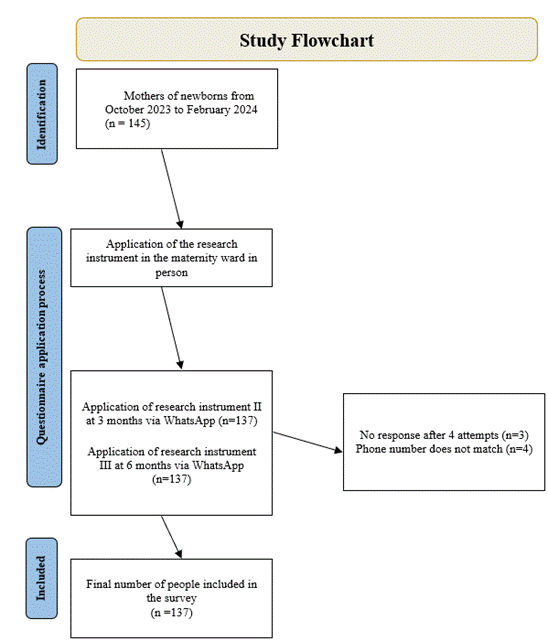
Data collection was divided into three stages, the first at the baby’s birth, during the hospital stay, the second at three months of age, and the third at six months (Figure 1). For this purpose, three qualitative and quantitative research instruments were developed. Questionnaire I was applied in the hospital maternity ward (baseline period), in person with the mothers of the infants after signing the informed consent form. The researcher handed out the printed questionnaire, and the mothers answered the questions without any intervention from the researcher. Questionnaire I addressed sociodemographic characteristics, prenatal care, and gestational complications, as well as immediate postnatal care.
At three months of age, contact was initially made by telephone, and subsequently Questionnaire II was sent via WhatsApp using the Google Forms platform. During this period, difficulties related to breastfeeding in the first three months, the introduction of other forms of feeding, and myths related to breastfeeding were addressed.
Finally, at six months, research instrument III was sent in a similar way to that sent at three months. The last questionnaire in the segment sought to assess the weaning rate after returning to work, the introduction of other forms of feeding, artificial nipples, and myths related to breastfeeding.
The data from this research were organized and analyzed using the Statistical Package for the Social Sciences (SPSS, version 26.0) software. In the descriptive analysis, the data were expressed as absolute number (n) and percentage (%) or mean and standard deviation (SD±).
To verify the association between possible influencing variables in the maintenance of breastfeeding, Pearson’s Chi-Square test was used, followed by the analysis of standardized adjusted residuals (ra), significant when the associations ra>1.96. And in these significant associations, when possible, according to statistical criteria, the Relative Risk (RR) was calculated. A significance level of 5% was established (p≤0.05; α = 0.05).
Figure 1 - Study flowchart
The initial number of participants was 145 mothers of newborns. At the end of the research, there were 137 breastfeeding mothers. Most of the mothers were between 31 and 35 years old (30.4% n=42). Regarding marital status, 51.4% (n=71) of the mothers interviewed were married, and most had completed high school or had some higher education (44.9% n=62). Among all participants, the majority reported having paid work (58% n=80), and the most prevalent monthly family income was 1-2 minimum wages (28.3% n=39) (Table 1).
Most women received guidance on proper latch (88.4% n=122), as well as the benefits of breastfeeding for both themselves (78.3% n=108) and the baby (92% n=127). The timing of the desire to breastfeed was divided in the questionnaire into up to six months (24.6% n=34), between six months and two years (59.4% n=82) and more than two years (15.9% n=22) (Table 1).
Table 1 - Sociodemographic characteristics of mothers of newborns and perspectives related to breastfeeding
|
Variables |
|
||
|
|
N=137 |
||
|
Sociodemographic characterization |
|
||
|
Age |
|
||
|
15-20 years |
12 (8.7) |
||
|
21-25 years |
41 (29.7) |
||
|
26-30 years |
24 (17.4) |
||
|
31-35 years |
42 (30.4) |
||
|
> 36 years |
19 (13.8) |
||
|
Marital status |
|
||
|
Single |
63 (45.7) |
||
|
Married |
71 (51.4) |
||
|
Divorced |
4 (2.9) |
||
|
Schooling |
|
||
|
No education or incomplete primary education |
4 (2.9) |
||
|
Completed primary education or incomplete secondary education |
36 (26.1) |
||
|
Completed secondary education or incomplete higher education |
62 (44.9) |
||
|
Complete higher education |
36 (26.1) |
||
|
Paid work |
|
||
|
No |
58 (42.0) |
||
|
Yes |
80 (58.0) |
||
|
Family income |
|
||
|
Up to 1,320.00 |
25 (18.1) |
||
|
1,320.01-2.640.00 |
39 (28.3) |
||
|
2,640.00-3.960.00 |
29 (21.0) |
||
|
3,960.00-5.280.00 |
21 (15.2) |
||
|
More than 5,280.00 |
24 (17.4) |
|
|
|
Other variables related to breastfeeding |
|
||
|
Support network |
|
|
|
|
No |
128 (92.8) |
|
|
|
Yes |
10 (7.2) |
|
|
|
Breastfeeding after returning to work |
|
|
|
|
No |
13 (9.4) |
|
|
|
Yes |
125 (90.6) |
|
|
|
Preparing for breastfeeding |
|
|
|
|
No |
63 (45.7) |
|
|
|
Yes |
75 (54.3) |
|
|
|
Proper grip instructions |
|
|
|
|
No |
16 (11.6) |
|
|
|
Yes |
122 (88.4) |
|
|
|
Benefits of breastfeeding for the mother |
|
|
|
|
No |
30 (21.7) |
|
|
|
Yes |
108 (78.3) |
|
|
|
Benefits of breastfeeding for the baby |
|
|
|
|
No |
11 (8.0) |
|
|
|
Yes |
127 (92.0) |
|
|
|
Desire to breastfeed |
|
|
|
|
Up to 6 months |
34 (24.6) |
|
|
|
Between 6 months and 2 years |
82 (59.4) |
|
|
|
More than 2 years |
22 (15.9) |
|
|
|
Difficulty breastfeeding |
|
|
|
|
No |
89 (64.5) |
|
|
|
Yes |
49 (35.5) |
|
|
|
Professional who assisteda |
|
|
|
Caption: SD = standard deviation; n = sample size; N = population size. Note: Data are expressed as absolute numbers (n) and percentages (%).
Regarding the difficulties encountered in the first three months, 75.5% (n=40) of the mothers who experienced these difficulties progressed to early weaning. These mothers demonstrated a 3.9 times higher relative risk compared to those who did not have difficulties. A large proportion of mothers reported problems related to milk production (39.3% n=24). Other complications were also reported, such as nipple fissures (37.7% n=23), incorrect latch (16.4% n=10), and inadequate weight gain (6.6% n=4) (Table 2).
At six months, only 32.1% (n=44) of mothers were still exclusively breastfeeding their children, while 67.9% (n=93) had already stopped breastfeeding. Returning to work is a reality for 65.7% (n=90) of the respondents. Of these, 81.7% (n=76) progressed to early weaning, with a tendency to wean 2.3 times higher compared to those mothers who did not return to work.
According to questionnaire responses, most respondents reported that during their absence from work, their baby is cared for by daycare (43.8% n=60), family members (19.7% n=27) or paid caregivers (3.6% n=5). Of these mothers, 77.4% (n=106) do not leave their milk available to be offered during their absence; of these, 89.2% (n=83) progressed to early weaning.
Artificial nipples were introduced by more than half of the mothers by three months (72.3% n=99). Of these, it is assumed that 21.6% (n=11) started using them after leaving the maternity ward and 60.7% in less than 30 days. Thus, they showed a 2.5 times greater tendency towards weaning. Additionally, at six months, 76.6% (n=105) had started using artificial nipples, 23% (n=17) after leaving the maternity ward and 59.4% in less than 30 days, with a 1.5 times greater relative risk of early weaning. (Tables 2 and 3, respectively).
At six months, 65.7% (n=90) of mothers who were still breastfeeding reported knowing the benefits of breastfeeding and feeling secure about breastfeeding. While among those who had stopped breastfeeding, 27% (n=37) reported feeling insecure about breastfeeding and believing that their milk might be weak (Table 3)
Table 2 – Factors associated with exclusive breastfeeding until 3 months of age in newborns
|
Variables of exclusive breastfeeding |
Exclusive breastfeeding |
Total |
p-value |
RR |
|
|
No |
Yes |
||||
|
n = 53 |
n = 84 |
N=137 |
|||
|
If not, how long were you able to exclusively breastfeed? |
|
|
|
|
|
|
≤ 7 days |
11 (20.8) |
- |
11 (20.8) |
NA |
NA |
|
≤ 15 days |
5 (9.4) |
5 (9.4) |
|||
|
≤ 30 days |
12 (22.6) |
12 22.6) |
|||
|
≤ 60 days |
25 (47.2) |
25 (47.2) |
|||
|
Difficulties in breastfeeding in the first 3 months |
|
|
|
|
|
|
No |
13 (24.5) |
64 (76.2) £ |
77 (56.2) |
0.01* |
3.9* |
|
Yes |
40 (75.5) £ |
20 (23.8) |
60 (43.8) |
||
|
If so, what difficulties |
|
|
|
|
|
|
Milk production |
22 (52.4) £ |
2 (10.0) |
24 (39.3) |
0.01* |
NA |
|
Breast fissures |
12 (29.3) |
11 (55.0) £ |
23 (37.7) |
||
|
Incorrect grip |
3 (7.3) |
7 (35.0) £ |
10 (16.4) |
||
|
Inadequate weight gain |
4 (9.8) |
0 (0.0) |
4 (6.6) |
||
|
Introduction of infant formula |
|
|
|
|
|
|
No |
0 (0.0) |
84 (100.0)£ |
84 (57.7) |
0.01* |
NA |
|
Yes |
53 (100.0)£ |
0 (0.0) |
58 (42.3) |
||
|
Introduction of artificial nipples |
|
|
|
|
|
|
No |
7 (13.2) |
31 (36.9) £ |
38 (27.7) |
0.01* |
2.5* |
|
Yes |
46 (86.8) £ |
53 (63.1) |
99 (72.3) |
||
|
If so, when |
|
|
|
|
|
|
After hospital discharge |
8 (30.8) |
3 (12.0) |
11 (21.6) |
0.31 |
NA |
|
≤ 7 days |
2 (7.7) |
5 (20.0) |
7 (13.7) |
||
|
≤ 15 days |
3 (11.5) |
1 (4.0) |
4 (7.8) |
||
|
≤ 30 days |
9 (34.6) |
11 (44.0) |
20 (39.2) |
||
|
≤ 60 days |
4 (15.4) |
5 (20.0) |
9 (17.6) |
|
|
|
Alternative you mostly identify with: |
|
|
|
|
|
|
I feel safe breastfeeding and I know it is the best thing for my baby |
20 (37.2) |
79 (94.0) £ |
99 (72.3) |
0.01* |
NA |
|
I feel safe breastfeeding but it has been very difficult as I don’t have support network |
1 (1.9) |
4 (4.8) |
5 (3.6) |
||
|
I feel insecure with breastfeeding and my support network cannot help me |
3 (5.7) |
0 (0.0) |
3 (2.2) |
||
|
I feel insecure with breastfeeding and I believe my milk can be weak |
29 (54.7) £ |
1 (1.2) |
30 (21.9) |
||
|
Professional help for breastfeeding |
|
|
|
|
|
|
Yes, doctor |
17 (32.1) £ |
4 (4.8) |
21 (15.3) |
0.01* |
NA |
|
Yes, nurse |
13 (24.5) |
13 (15.5) |
26 (19.0) |
||
|
Yes, speech therapist |
1 (1.9) |
2 (2.4) |
3 (2.2) |
||
|
I did not seek professional help |
17 (32.1) |
57 (67.9) £ |
74 (54.0) |
||
|
Yes, lactation consultant |
5 (9.5) |
8 (9.5) |
13 (9.5) |
||
|
Support during breastfeeding |
|
|
|
|
|
|
No |
4 (7.5) |
17 (20.2) £ |
21 (15.3) |
0.53 |
NA |
|
Yes |
49 (92.5) £ |
67 (79.2) |
116 (84.7) |
||
|
Breastfeeding after returning to work |
|
|
|
|
|
|
No |
27 (50.9) £ |
8 (9.5) |
35 (25.5) |
0.01* |
2.3* |
|
Yes |
26 (49.1) |
76 (90.5) £ |
102 (74.5) |
||
Caption: n = sample size; N = population size; RR = relative risk. Note: Data are expressed as absolute number (n) and percentage (%). NA = not applicable due to the non-significance of the association.
Table 3 - Factors associated with exclusive breastfeeding until 6 months of age in newborns
|
|
Exclusive breastfeeding |
Total |
p-value |
RR |
|
|
Variables of exclusive breastfeeding |
No |
Yes |
|||
|
N = 93 |
N = 44 |
N = 137 |
|||
|
Returning to work |
|
|
|
|
|
|
No |
17 (18.3) |
30 (68.2) £ |
47 (34.3) |
0.01* |
2.3* |
|
Yes |
76 (81.7) £ |
14 (31.8) |
90 (65.7) |
||
|
Professional information on Maintaining breastfeeding |
|
|
|
|
|
|
No |
56 (60.2) |
32 (72.7) |
88 (64.2) |
0.18 |
NA |
|
Yes |
37 (39.8) |
12 (27.3) |
49 (35.8) |
||
|
If so, what professional |
|
|
|
|
|
|
I did not seek help |
46 (49.5) |
31 (70.5) |
77 (56.2) |
0.26 |
NA |
|
Doctor |
22 (23.7) |
9 (20.5) |
31 (22.6) |
||
|
Nurse |
6 (6.5) |
3 (6.8) |
9 (6.6) |
||
|
Others |
19 (20.4) |
1 (2.3) |
20 (14.6) |
||
|
Where baby stays during work time |
|
|
|
|
|
|
Family |
17 (18.3) |
10 (22.7) |
27 (19.7) |
0.01* |
NA |
|
Paid caregiver |
4 (4.3) |
1 (2.3) |
5 (3.6) |
||
|
Day care |
56 (60.2) £ |
4 (9.1) |
60 (43.8) |
||
|
Iam not working |
16 (17.2) |
29 (65.9) £ |
45 (32.8) |
||
|
Milk to be offered during absence |
|
|
|
|
|
|
No |
83 (89.2) £ |
23 (52.3) |
106 (77.4) |
0.01* |
NA |
|
Yes |
10 (10.8) |
21 (47.7) £ |
31 (22.6) |
||
|
Introducing solid food |
|
|
|
|
|
|
No |
12 (19.9) |
14 (31.8) £ |
26 (19.0) |
0.08 |
NA |
|
Yes |
81 (87.1) £ |
30 (68.2) |
111 (81.0) |
||
|
Introducing infant formula |
|
|
|
|
|
|
No |
6 (6.5) |
40 (90.9) £ |
46 (33.6) |
0.01* |
2.1* |
|
Yes |
87 (93.5) £ |
4 (9.1) |
91 (66.4) |
||
|
Introducing artificial nipples |
|
|
|
|
|
|
No |
15 (16.1) |
17 (38.6) £ |
32 (23.4) |
0.04* |
1.5* |
|
Yes |
78 (83.9) £ |
27 (61.4) |
105 (76.6) |
||
|
If so, when |
|
|
|
|
|
|
After hospital discharge |
11 (21.2) |
6 (27.3) |
17 (23.0) |
0.41 |
NA |
|
≤ 7 days |
6 (11.5) |
0 (0.0) |
6 (8.1) |
||
|
≤ 15 days |
2 (3.8) |
2 (9.1) |
4 (5.4) |
||
|
≤ 30 days |
23 (44.2) |
11 (50.0) |
34 (45.9) |
||
|
≤ 60 days |
10 (19.2) |
3 (13.6) |
13 (17.6) |
||
|
Alternative you mostly identify with: |
|
|
|
|
|
|
I feel safe breastfeeding and I know it is the best thing for my baby |
46 (49.5) |
44 (100.0) £ |
90 (65.7) |
0.01* |
NA |
|
I feel safe breastfeeding but it has been very difficult as I don’t have support network |
5 (5.4) £ |
0 (0.0) |
5 (3.6) |
||
|
I feel insecure with breastfeeding and my support network cannot help me |
5 (5.4) £ |
0 (0.0) |
5 (3.6) |
||
|
I feel insecure with breastfeeding and I believe my milk can be weak |
37 (39.8) £ |
0 (0.0) |
37 (27.0) |
||
|
Support during breastfeeding |
|
|
|
|
|
|
No |
13 (14.0) |
7 (15.9) |
20 (14.6) |
0.76 |
NA |
|
Yes |
80 (86.0) |
37 (84.1) |
117 (85.4) |
||
|
Satisfaction with breastfeeding |
|
|
|
|
|
|
No |
38 (40.9) £ |
0 (0.0) |
38 (27.7) |
0.01* |
NA |
|
Yes |
55 (59.1) |
44 (100.0) £ |
99 (72.3) |
||
Caption: n = sample size; N = population size; RR = relative risk. Note: Data are expressed as absolute number (n) and percentage (%). NA = not applicable due to the non-significance of the association.
Exclusive breastfeeding is a fundamental period in infancy, especially for the child's cognitive, immunological, and behavioral development, being effective in the first six months of life.10,11 The 2019 National Study of Infant Feeding and Nutrition, composed of 14,558 children residing in 12,524 households, showed that the prevalence of exclusive breastfeeding among children under four months was 59.7% in Brazil, while in those under six months, it was 44.8%.18,19 In our study, at three months, 61.3% were still exclusively breastfed. In contrast, at six months of age, only 32.1%.18,19
It is recommended that breastfeeding continue until two years of age, associated, from six months onwards, with different foods as a complement, thus promoting full nutrition, including essential vitamins.11 However, early weaning is a current problem of a multifactorial nature and can be caused by several factors, such as socioeconomic, cultural and environmental factors, and it is important that counseling and monitoring are also carried out from prenatal to postpartum for mothers.14,11
Maternal work outside the home can be a significant obstacle to breastfeeding, especially exclusive breastfeeding.3,4 In this sense, current literature establishes that returning to work is considered one of the main factors for early weaning.12,13 The Ministry of Health recommends a maternity leave period of 120 days for nursing mothers, corresponding to four months. Conversely, it is also recommended that exclusive breastfeeding be carried out until the infant is six months old.12 In our study, at six months, 81.7% (n=93) of the mothers had returned to work, and none were exclusively breastfeeding their children anymore.
A cohort study conducted with 5,166 mothers of live births demonstrated that working full-time or the intention to do so in the first year postpartum was a risk factor for women to discontinue exclusive breastfeeding before the sixth month of the children's lives.20 In our study, after the baby's birth, 90.6% (n=125) of the mothers responded that they wished to continue breastfeeding after returning to work. However, at six months of age, 81.7% (n=93) were no longer exclusively breastfeeding.
The most common difficulties encountered in this study during breastfeeding are cracking, pain, and nipple fissures. Studies indicate that approximately 80% to 96% of postpartum women experience pain up to the tenth day after delivery.18,19,22 A 2017 systematic review, comprising 1,481 articles, showed that among the factors associated with weaning, 17.9% are related to nipple fissures, pain, and nipple trauma.4,19,20,22 In our study, 37.7% of mothers reported difficulties related to nipple fissures and 16.4% to incorrect latch. Additionally, 39.3% reported difficulties related to milk production and 6.6% to inadequate weight gain in the baby.
The use of pacifiers or bottles is presented in the current literature as an important factor for early weaning. In our study, it was found that, at three months, 72.3% of mothers started using artificial nipples. Another study showed that 52.1% of children were using pacifiers before six months of age.18,19,21,22 Pacifiers have often been associated with early weaning, due to manifestations of difficulties for mothers in dealing with the baby's crying and hunger. Consequently, nipple confusion among children has become increasingly common, leading to early weaning.4,18,19,20,22
This study presented as main limitations the loss of mothers during the follow-up of the work and the difficulty in contacting them.
Given the results and discussions presented in this study, we see that, despite the numerous factors that influence the interruption of breastfeeding, the greatest difficulties encountered relate to the mother's return to work, the use of pacifiers, nipple trauma and fissures, incorrect latch, and beliefs about weak milk.
The data from this research are important for better recognition of the condition by pediatricians, obstetricians, family doctors, nurses, and other health professionals. Similarly, they help to visualize the need for public policies to encourage exclusive breastfeeding.
1. Giugliani ERJ. Growth in exclusively breastfed infants. J Pediatr (Rio J). 2019;95:79-84.
2. Brasil. Ministério da Saúde. Saúde da criança: aleitamento materno. Brasília (DF): Ministério da Saúde; 2018. (Cadernos de Atenção Básica, n. 23).
3. Brasil. Ministério da Saúde. Amamentação exclusiva nos 6 primeiros meses só atinge 38,6% das crianças brasileiras [Internet]. Brasília (DF): Portal Saúde; 2017 [cited 2025 Oct 9]. Available from: https://www.gov.br/secretariageral/pt-br/consea/noticias/2017/amamentacao-exclusiva-nos-6- primeiros-meses-so-atinge-38-6-das-criancas-brasileiras#:~:text=Na%20Semana%20Mundial%20do%20Aleitamento,seis%20primeiros%20meses%20de%20vida
4. Carvalho CA, Fonsêca PCA, Nobre LN, Silva MA, Pessoa MC, Ribeiro AQ, et al. Fatores sociodemográficos, perinatais e comportamentais associados aos tipos de leite consumidos por crianças menores de seis meses: coorte de nascimento. Cienc Saude Coletiva. 2017;22(11):3699-709.
5. Ferreira HLOC, Oliveira MF, Bernardo EBR, Almeida PC, Aquino PS, Pinheiro AKB, et al. Fatores associados à adesão ao aleitamento materno exclusivo. Cienc Saude Coletiva. 2018;23(3):683-90.
6. Marques ES, Cotta RMM, Priore SEM. Mitos e crenças sobre o aleitamento materno. Cienc Saude Coletiva. 2018;16(5):1173-82.
7. Lira ELB, Costa JR, Sousa PSA, Faria MD. Fatores responsáveis pela interrupção precoce da amamentação: uma revisão integrativa. Rev Interd Estud Saude. 2018;6(2).
8. Oliveira AKP, Melo RA, Maciel LP, Tavares AK, Amando AR, Sena CRS. Práticas e crenças populares associadas ao desmame precoce. Av Enferm. 2017;35(3):303-12.
9. Araújo SC, Souza ADA, Bomfim ANA, Santos JBD. Fatores intervenientes do desmame precoce durante o aleitamento materno exclusivo. Rev Eletr Acervo Saude. 2021;13(4).
10. Alvarenga SC, Castro DS, Leite FMC, Brandão MAG, Zandonade E, Primo CC. Fatores que influenciam o desmame precoce. Aquichan. 2017;17(1):93-103.
11. Silva DP, Soares P, Macedo MV. Aleitamento materno: causas e consequências do desmame precoce. Unimontes Cienc. 2017;19(2):147-57.
12. Silva NO. As principais causas e consequências do desmame precoce: uma revisão integrativa da literatura. Rev Cient Multidiscipl Nucleo Conhecimento. 2021;6(10):125-37.
13. Souza DR, Diógenes SM, Andrade JS, Oliveira PC. Aleitamento materno e os motivos do desmame precoce no município de Porto Velho/RO. Rev Eletr Acervo Saude. 2019;31:1-7.
14. Neifert M, Bunik M. Overcoming clinical barriers to exclusive breastfeeding. Pediatr Clin North Am. 2013;60:115-45.
15. Murtagh L, Moulton AD. Working mothers, breastfeeding, and the law. Am J Public Health. 2011;101:217-23.
16. Andrade HS, Pessoa RA, Donizete LCV. Fatores relacionados ao desmame precoce do aleitamento materno. Rev Bras Med Fam Comunidade. 2018;13(40):1-11.
17. Universidade Federal do Rio de Janeiro. Aleitamento materno: prevalência e práticas de aleitamento materno em crianças brasileiras menores de 2 anos: ENANI-2019. Rio de Janeiro: UFRJ; 2021.
18. Ribeiro MRC, Santos AM, Gama MEA, Santos ALGA, Lago DCF, Yokokura AVC, et al. Ocupação materna e duração do aleitamento materno exclusivo: resultados de uma coorte de nascimento em São Luís, Maranhão, Brasil. Cad Saude Publica. 2022;38(7).
19. Margotti E, Margotti W. Fatores relacionados ao aleitamento materno exclusivo em bebês nascidos em hospital amigo da criança em uma capital do Norte brasileiro. Saude Debate. 2017;41:860-71.
20. Santos PV, Martins MCC, Tapety FI, Paiva AA, Fonseca FMNS, Brito AKS. Desmame precoce em crianças atendidas na Estratégia Saúde da Família. Rev Eletr Enferm. 2018;20:1-12.
21. Feitosa MEB, Silva SEO, Silva LLD. Aleitamento materno: causas e consequências do desmame precoce. Res Soc Dev. 2020;9(7):1-15.
22. Von Elm E, Altman DG, Egger M, Pocock SJ, Gøtzsche PC, Vandenbroucke JP; STROBE Initiative. Strengthening the Reporting of Observational Studies in Epidemiology (STROBE) statement: guidelines for reporting observational studies. PLoS Med. 2007;4(10):e296.
23. Barbetta PA. Estatística aplicada às ciências sociais. 3rd ed. Florianópolis: Editora da UFSC; 1998.
Scientific Editor:
Fernanda Pinto Mariz ORCID: https://orcid.org/0000-0002-6981-2352
Editor: Sociedade de Pediatria do Rio de Janeiro – SOPERJ
E-mail: secretaria@soperj.org.br
Financial support:
None.
Availability of research data:
The underlying content of the research text is contained in the article.
Conflict of interests:
None.
Authors’ contributions:
DNC Bandeira: Statistical analysis, Fundraising, Data collection, Conceptualization, Resource management, Project management, Research, Methodology, Writing - Original preparation, Writing - Review and editing, Software, Supervision, Validation, Visualization.
Padre Rocha: Statistical analysis, Fundraising, Data collection, Conceptualization, Resource management, Methodology, Writing - Original preparation, Writing - Review and editing, Software, Supervision, Validation.
AL Ceccato: Statistical analysis, Fundraising, Data collection, Conceptualization, Resource management, Project management, Research, Publication - Original preparation, Writing - Review and editing, Validation, Visualization.
MCW Pasa: Statistical analysis, Fundraising, Data collection, Resource management, Project management, Writing - Original preparation, Writing - Review and editing, Supervision, Validation.
Rev Pediatria SOPERJ 2026;26(2): e20260376